




CPD says Bangladesh’s tax system favours fossil fuels over renewables, warning that high duties on clean technologies are slowing investment and weakening the country’s energy transition.
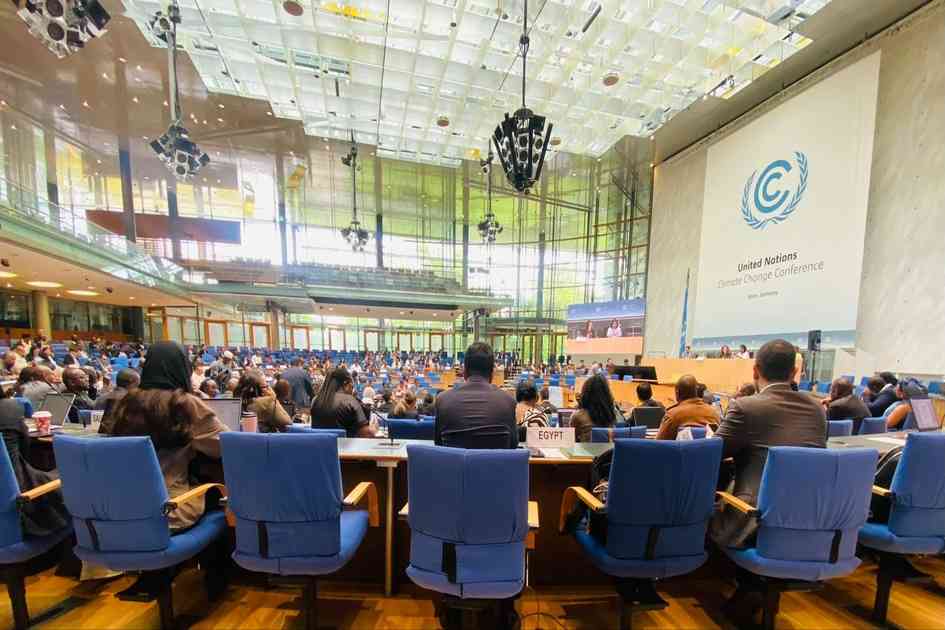
The Sixty-Fourth Sessions of the UNFCCC Subsidiary Bodies (SB64) opened in Bonn on Monday, with early talks revealing sharp divisions among Parties on climate finance and adaptation priorities.
A key debate on the opening day centred on the new Climate Finance Work Programme. Developing countries, including the G77+China, the Least Developed Countries (LDCs), the Alliance of Small Island States (AOSIS), the Independent Association of Latin America and the Caribbean (AILAC), the African Group and BASIC countries (Brazil, South Africa, India and China), called for discussions to remain anchored in Article 9.1 of the Paris Agreement, emphasising the obligation of developed countries to provide public climate finance. Developed countries, however, argued that the work programme should cover the full scope of Article 9, exposing a key fault line in the negotiations.
Adaptation emerged as a major priority across developing country groups, with calls for progress on Global Goal on Adaptation frameworks, including the Baku Adaptation Roadmap and the Belém-Addis Vision. Parties also reiterated the need to scale up adaptation finance, including the goal of tripling public grant-based support by 2035, alongside stronger means of implementation. Divisions also emerged over proposed reforms to adaptation architecture, with some developing countries warning that such changes could weaken existing commitments.
Concerns were also raised by developing nations over the quality, predictability and adequacy of adaptation finance, with several groups stressing that discussions should remain grounded in Article 9.1 obligations rather than focusing narrowly on access mechanisms.
Loss and Damage received comparatively limited attention during the opening sessions, prompting concern from LDC representatives over the absence of a dedicated agenda item. Delegates indicated the issue may be taken forward through the UAE Global Stocktake Dialogue.
The COP30 Presidency’s roadmap on halting and reversing deforestation by 2030 also drew significant attention, with finance emerging as a key enabling factor. Several upcoming processes, including the UAE Global Stocktake Dialogue, consultations on transitioning away from fossil fuels and the launch of the Action Agenda at London Climate Action Week, were highlighted as important platforms for advancing implementation.
For Bangladesh and other climate-vulnerable countries, the key priority remains securing stronger accountability under Article 9.1 on climate finance while ensuring that adaptation, resilience and implementation support remain central to the road to COP31.
Sohanur Rahman said SB64 must deliver concrete progress on climate finance and adaptation.
“SB64 must deliver clear commitments on climate finance, especially under Article 9.1. Adaptation and loss and damage cannot remain sidelined if we are serious about climate justice and the survival of vulnerable communities,” he said.
As the UNFCCC Bonn Climate Change Conference (SB64, June 8-18) continues, the Global Climate and Health Alliance has urged governments to triple public grant-based adaptation finance to at least $120 billion by 2035, establish national energy transition roadmaps, deliver on loss and damage commitments and define a clear process and scope for a loss and damage report.
“Over the next fortnight in Bonn, governments must identify clear routes to triple public grant-based adaptation finance to at least $120 billion by 2035,” said Jess Beagley, Policy Lead at the Global Climate and Health Alliance. She warned that without adaptation finance, life-saving action in health systems and essential sectors such as water, sanitation, disaster preparedness and food systems would be impossible, increasing the risks of malnutrition, waterborne disease and exposure to extreme weather.
Beagley added that developed countries must clearly outline national energy transition roadmaps to support the shift away from fossil fuels, reduce emissions, strengthen energy security and build resilience. She stressed that a just transition must remain central to the second global stocktake.
“Fossil fuels also need to be addressed in the UNFCCC’s just transition work programme,” said Nova Tebbe, Postdoctoral Researcher at the Global Climate and Health Alliance. She said no new fossil fuel exploration is compatible with limiting warming to 1.5C, warning that gas expansion risks undermining both climate goals and public health. She called for universal access to reliable, safe and affordable clean energy for cooking, healthcare facilities and communities lacking energy access.
Tebbe added that COP28 agreed to establish arrangements for a just transition through the UAE Just Transition Work Programme, which must be adequately resourced and grounded in principles including the right to health.
The alliance said the Bonn talks come at a critical moment for sustaining momentum on the transition away from fossil fuels and efforts to end deforestation by 2030, amid renewed warnings that global warming could exceed the 1.5C threshold.
The meeting also comes against the backdrop of recent global developments, including escalating geopolitical tensions in the Middle East affecting global energy markets, a ministerial meeting in Santa Marta, Colombia, where 57 countries advanced discussions on transitioning away from fossil fuels, and a United Nations General Assembly resolution supporting implementation of the International Court of Justice (ICJ) Advisory Opinion on climate change, reinforcing states’ legal obligations to act.




