

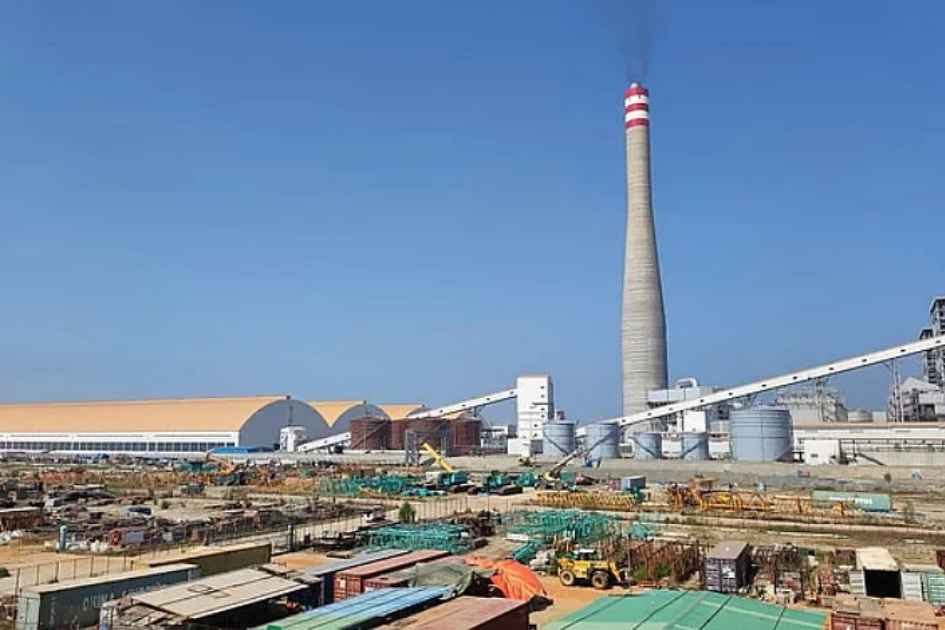



Once self-sufficient, Matarbari island now faces unemployment, displacement, pollution and insecurity as coal power and port development destroy livelihoods, restrict fishing, and deepen poverty.
Standing beside the boundary wall of a 530 billion taka project, the malnourished and disease-stricken children of Matarbari island in Moheshkhali stare with vacant and helpless eyes. It is hard not to feel that this mega project represents a reckless waste of public money.
At the start of the Matarbari coal power project, the then-prime minister and senior political leaders made grand promises. Some said Matarbari would become Singapore, others Malaysia or Switzerland. The comparison with Singapore was repeated most often. People were told everyone would get jobs, and well-paid ones. They would no longer need to farm salt, raise shrimp and crabs or fish in the river and sea. All would receive compensation under 21 categories. There would be no poor people left in Matarbari.
Since then, the round sun has set countless times over the blue waters of the Bay of Bengal along the western coast of Matarbari. With each sunset, darkness has deepened in household after household.
Matarbari has indeed become Singapore, in a sense. Crossing the new bridge on the smooth four-lane access road to the coal power plant and standing at the selfie point, one can take photos with smoke rising from the chimneys behind them and post them on social media for a Singapore-like feeling.
Driving at high speed on the glossy four-lane road built by filling in the Kohelia River can give a taste of Switzerland. Sipping tea or coffee at a shop near the coal jetty while watching ships or cranes unloading coal may evoke Malaysia for some. But for the island’s 100,000 residents, these are a curse. Development has brought slums into their lives, among the worst imaginable. There is no work, no food, no dignity and no security.
In December, the peak season for salt farming, there is no work in Matarbari. Faces are dry with exhaustion from idleness. Elsewhere along the southeast coast, salt-producing communities are extremely busy. Preparing salt fields, regular maintenance, pumping seawater, transferring water between plots, piling salt, weighing it, carrying it to boats or warehouses and transporting it to markets. Women are equally busy, preparing food for farmers, delivering it to the fields, making and repairing tools and weaving baskets for carrying salt.
Once, workers from outside Matarbari came here during the salt season. Now the situation is reversed. Rama Das, a resident of the Hindu neighbourhood, said her husband took a job at a hotel in Cox’s Bazar a year ago because there was no work left on the island. It was the first time anyone in her family had gone elsewhere for work, she said, lowering her face in embarrassment.
The number of people migrating from Matarbari is growing. Some leave in search of temporary work, others abandon the island permanently, moving to urban slums, distant hills or other areas to sell their labour for almost nothing.
Matarbari is a small island in Moheshkhali upazila of Cox’s Bazar district. Densely populated, its residents once lived by fishing in the Bay of Bengal and the Kohelia River, producing salt in the dry season and farming shrimp, crabs and fish during the monsoon. Rice, vegetables and other crops were grown inland, and livestock was common. Matarbari was economically self-sufficient and its people relatively solvent.
The island has since gained national and international attention due to the Matarbari coal power plant and the under construction deep sea port. The government planned to turn the island into a power hub, primarily based on coal-fired plants. This included a 2,400 megawatt Matarbari coal plant and a 1,320 megawatt Kohelia coal plant.
Nearly 3,000 acres of land were acquired for these projects, along with large areas for a deep sea port and an economic zone. Locals say the process amounted to land grabbing rather than lawful acquisition. These lands were the backbone of local livelihoods, used for salt, shrimp and crab farming. The Kohelia River was a major fishing ground and the centre of trade and economic activity. Fishing in the open sea took place year round.
In 2021, the government cancelled the Kohelia coal plant along with ten other planned coal projects. Construction continued on the first phase of the Matarbari plant, a 1,200 megawatt unit. The project was financed and technically supported by Japan’s JICA, with Sumitomo Corporation involved in construction.
The plant is owned by Coal Power Generation Company Bangladesh Limited, formed to expand coal power generation. In 2022, JICA withdrew from financing the second 1,200 megawatt phase, and Sumitomo declined to bid. The second phase never materialized, but the first phase uses the entire 1,500 acres acquired for both.
Before land acquisition and implementation in 2014, local communities were not properly consulted and potential losses were not explained. Residents protested. Women marched with brooms in hand against the acquisition.
When land filling began, all 11 sluice gates used for water management were closed. Natural water flow within the island collapsed. Waterlogging began in the 2017 monsoon and reached severe levels in 2018, directly affecting more than 10,000 families and indirectly the entire population.
When the main road went underwater, residents were effectively trapped. After protests, a temporary solution was installed by placing pipes at the mouth of the Rangakhali canal, the island’s main drainage route to the Kohelia River. The once vast river has since turned into a stagnant water body.
From the start of construction, authorities restricted fishing in the Kohelia River and access to the sea. Construction waste filled the river. Later, an access road was built over it.
Thousands of fishing families who depended on the river are now unemployed and struggling to survive. The island’s independent water management system, essential for both people and nature, was dismantled. Residents say groundwater levels have been falling rapidly since the power plant was built.
Landowners waited years to receive compensation. Research reports show that travel to the Cox’s Bazar land office, accommodation and regular bribes consumed about 30 percent of the compensation. Some owners have still not been paid due to legal disputes.
Forty to fifty families evicted from the project area received resettlement housing six to seven years later. Although they were promised permanent jobs, few received any. About 1,100 workers were identified for limited compensation, paid five to six years after the project began.
During construction, some locals found work alongside outside labourers, but in small numbers and in roles they were not trained for. When construction ended, they were again left unemployed. No alternative livelihoods were arranged for the thousands who lost land and jobs.
Matarbari residents have lost their main source of livelihood. Even remaining homestead land is no longer secure, as large companies seek to acquire it through various tactics.
The situation is dire. There is no work. Fishing in the river and sea is restricted by the power plant and port authorities. Many do not own large boats to fish in deep waters.
The Matarbari coal power plant began commercial operations in 2024. Smoke now pours constantly from its chimneys. It is hard to find another coal plant anywhere in the world located in such a densely populated area without proper resettlement.
Globally, the coal era is ending due to climate risks. Fully dependent on imported coal, the Matarbari plant may shut down before its intended lifespan. It has already faced multiple shutdowns due to coal shortages and mechanical faults. Before eventual abandonment, it is expected to inflict further damage on local lives, nature and the national economy.
Ironically, despite lacking fossil fuel reserves, Bangladesh has built its energy sector around imported fossil fuels, while paying little attention to abundant renewable resources.
The air in Matarbari is growing heavier. Drinking water is becoming unsafe, contaminated by coal ash and toxic heavy metals such as lead. Mohammad Ali, an elderly fisherman living by the Kohelia River, said, “We cannot stay on this island much longer. Leaving behind the memories of our parents and grandparents, we will soon have to flee into the unknown.”
This article is republished from The Daily Prothom Alo




