

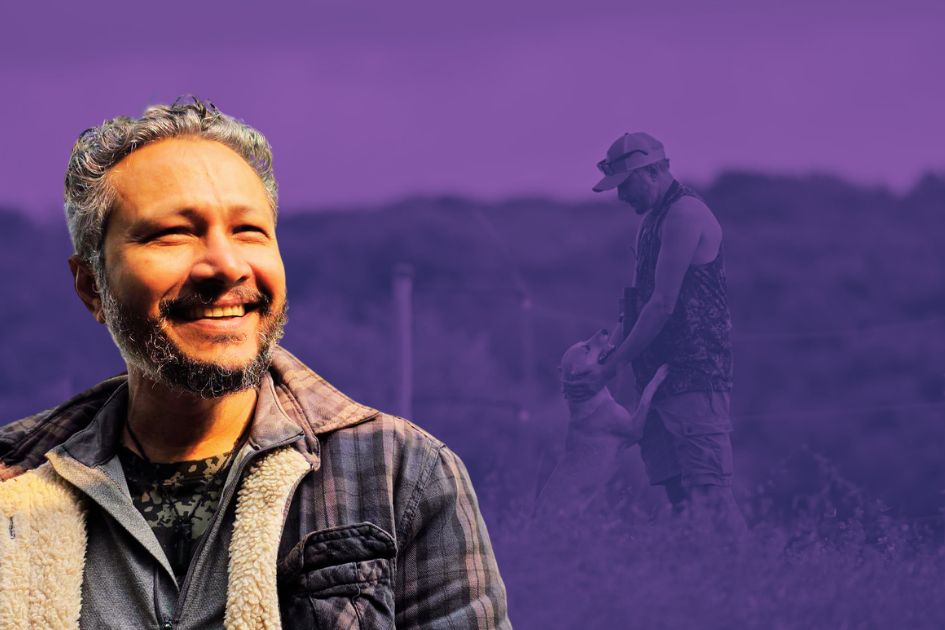



After leaving a life in England, Mahfuz Russel is rebuilding forests in Khagrachhari, empowering communities and protecting wildlife threatened by deforestation, fires and poaching in Bangladesh’s hill districts today.
Not long ago, Bangladesh’s forests and hills echoed with the sounds of wildlife and birds. Stories of wild animals once filled childhood memories, often told by parents and grandparents. Those tales sometimes sparked fear, sending children running to hide in their mother’s embrace at the thought of a tiger or lion appearing.
Today, such stories have faded into folklore.
Uncontrolled deforestation has turned forests and hills into barren land. Trees are cut down indiscriminately, displacing wildlife. Fires are often set, destroying habitats and killing animals. These incidents occur regularly in the three districts of the Chittagong Hill Tracts.
Despite this, there appears to be little concern among those responsible. Yet the Earth is not meant for humans alone. Human survival depends on nature and wildlife. The importance of conservation has been largely overlooked. The example of China’s sparrow eradication, which led to a severe food crisis, serves as a stark reminder.
Mahfuz Russel once lived a comfortable life in England with a well-paying job, a home and financial stability. Still, he felt drawn to nature. Curious about the lives of people fully dependent on the environment, he travelled to the Amazon rainforest in Brazil in 2012.

After spending a long time there, he developed a deep connection with nature. Following his father’s death, he decided to return to Bangladesh permanently. He did not want to live in Dhaka. During a visit, he explored different areas and eventually discovered the hills of Matiranga in Khagrachhari, a city in the Chittagong Hill Tracts of southeastern Bangladesh.
With the help of friends, he purchased land there. In 2016, he sold his home in Manchester and returned. Within six days of arriving in Dhaka, he moved to Matiranga. He rented a house in Purba Khedachhara village and began building his own home.
While doing so, he witnessed widespread deforestation. Wildlife was being displaced, fires were set in the hills each evening and poaching was rampant. Animals roamed helplessly with no shelter or food.
Mahfuz realized that protecting wildlife required saving the forest first. His efforts to raise awareness initially met resistance. Hunting and logging had long been sources of livelihood for local communities.
He understood that without alternative income sources, conservation would not succeed. With a group of friends, he launched the Pitachhara Forest and Wildlife Conservation Initiative.
He trained locals in handicrafts and cottage industries to help them become self-reliant. He also established a library for education and a healthcare centre for basic medical services. Gradually, awareness grew and conservation became more achievable.

Since its establishment in 2016, the Pitachhara forest has become a sanctuary for around 100 to 150 species of animals and birds. Rare species have been spotted, including red-headed trogon, lineated barbet, coppersmith barbet, sunbirds, woodpeckers and various species of owls and night birds.
The forest is also home to diverse amphibians, including rare yellow turtles once thought extinct. Other wildlife includes slow loris, crab-eating mongoose, jungle fowl and several species of snakes. Sightings of the endangered dhole, or wild dog, have also been reported.
“First we must save the forest,” Mahfuz Russel said. “If the forest cannot survive, wildlife will not survive either.”
This post is republished from Protidiner Bangladesh.




