


Illegal pesticide poisoning is killing brood fish in Bangladesh’s Halda River, endangering South Asia’s only natural carp breeding ground and threatening ecosystem collapse despite government bans and weak enforcement efforts.
The Halda River, South Asia’s only natural breeding ground for major carp species, is facing a severe new crisis. In addition to existing threats like pollution, illegal sand mining and unauthorized fishing, the use of poison to catch fish has emerged as a terrifying danger to the river’s entire biodiversity.
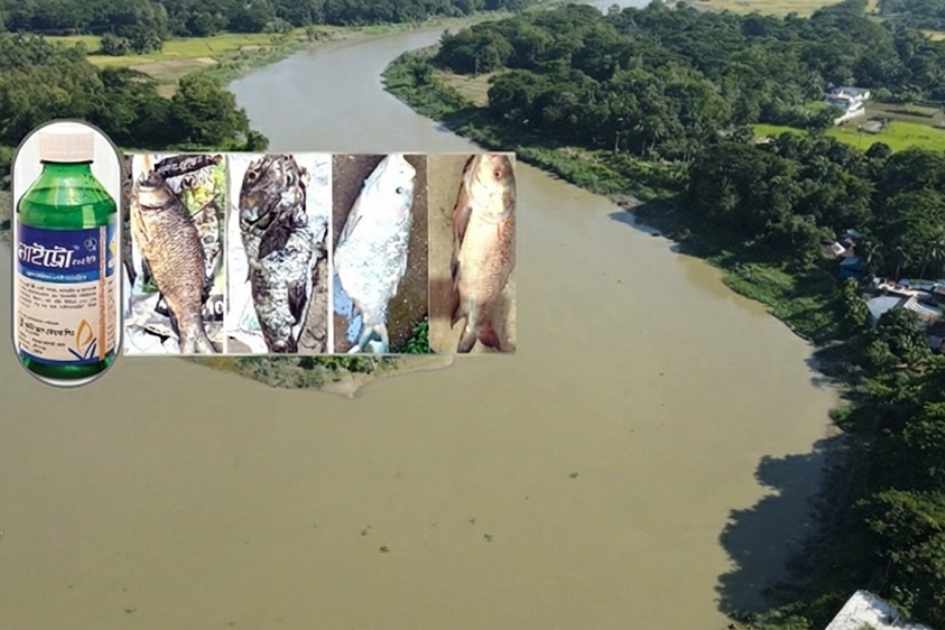
Over the last seven to eight months, seven large brood fish (mother fish), including Katla, Mrigal and Ayr, weighing between 2 and 20 kg, have been recovered dead from various sections of the river in Hathazari and Raozan. While preliminary examinations showed marks from sharp objects or fishing hooks on some fish, research by Professor Dr. Md. Manjurul Kibria, a renowned Halda researcher and professor at Chittagong University’s Zoology Department, revealed more alarming information. Toxic chemical residues were found in the bodies of the dead fish.
Dishonest fishermen are using a pesticide called “Nitro”, a combination of Chlorpyrifos and Cypermethrin, to catch fish in the Halda. This chemical, commonly used by farmers to kill pests in rice or vegetable fields, is easily available in local pharmacies and grocery stores.
Locals and experts report that fishermen apply this poison during the stagnant water period between high and low tides. Within minutes, everything from shrimp to small fish floats to the surface due to sudden oxygen depletion, making them easy to catch. Dr. Manjurul Kibria warned that if this continues, the water in various parts of the Halda will become completely devoid of oxygen, making it impossible for any aquatic life to survive.

The Halda is connected to 17 branch canals, including Dhurung, Sarta, Kagatia, Sonai and Madari. Most of the illegal poisoning takes place in these canals late at night. Dr. Sheikh Ahmad Al Nahid, Dean of the Faculty of Fisheries at Chittagong Veterinary and Animal Sciences University (CVASU), explained that the poison used in these branch canals eventually flows into the main Halda River, causing widespread damage.
Impact on the ecosystem and the food chain
The poisoning has a devastating effect on the river’s ecosystem. According to Dr. Nahid, while the death of large fish is visible, the destruction of microscopic life like phytoplankton and zooplankton, which forms the basis of the food chain, goes unnoticed. If the food chain is disrupted at its root, the entire ecosystem of the Halda will collapse.
Dr. Nahid also added, “We have seen incidents of killing fish using pesticides in various canals of the Sundarbans. Now, the same type of poison is being applied in the Halda River as well. However, this has no approval from the Department of Fisheries.”

Field investigations reveal that harmful pesticides are being sold openly in general pharmacies and even grocery stores in Hathazari and Raozan. A major concern has emerged regarding allegations that some guards appointed by the Upazila administration to prevent fish depletion are colluding with dishonest fishermen. Consequently, information often leaks before the administration can conduct raids, allowing the accused to remain beyond reach. Despite this, the administration has announced rewards for identifying those who apply poison.
Mohammad Shawkat, Senior Fisheries Officer of Hathazari Upazila, said, “The Upazila administration and the Department of Fisheries have announced rewards for those who help catch individuals fishing with poison.” He added that while they remain vigilant, the perpetrators are very cunning, often completing their illegal activities within just 10 to 20 minutes.
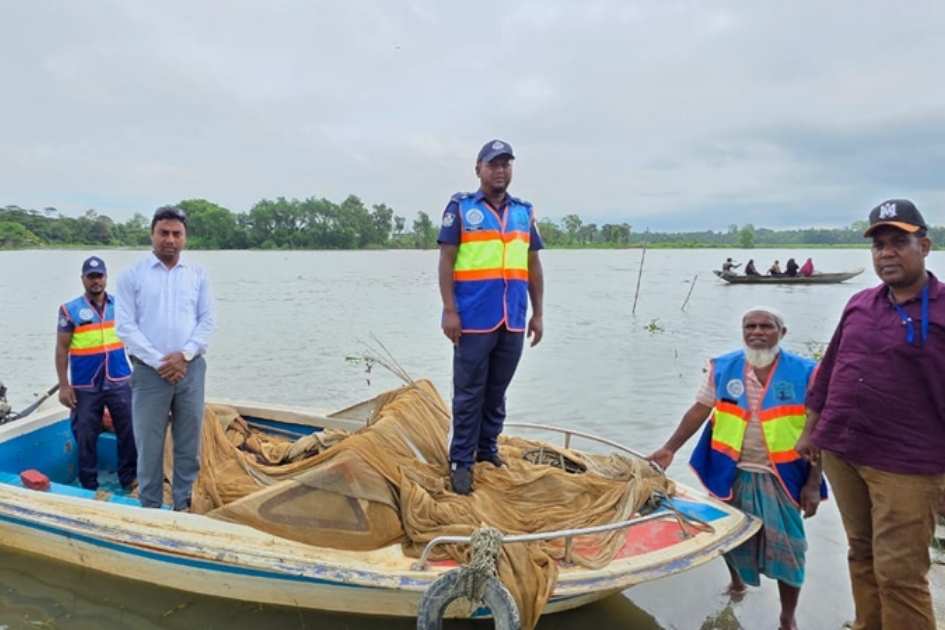
Hathazari Upazila Nirbahi Officer (UNO) Muhammad Abdullah Al Mumin stated that various initiatives, including regular raids and awareness campaigns, are being conducted. He noted, “We have already conducted mobile courts in those areas, seized several nets and issued fines. Fishing in the Halda using poison or nets is strictly prohibited.”
The government recently declared the Halda River a “Fisheries Heritage Area”, issuing an official gazette on November 5 with 17 strict restrictions. These include:
- Ban on catching any fish or aquatic animals.
- Fertilized egg collection is only under supervision.
- A ban on destroying the habitats of plants and animals.
- Prohibition of industrial waste dumping.
- Ban on sand mining and the use of heavy motorized vessels.
- Ban on tobacco cultivation along the banks and the use of harmful pesticides in nearby agricultural land.
Experts emphasize that the survival of the Halda depends on the awareness of the local people living along its banks. Dr. Kibria noted that since the locals are the primary beneficiaries of the river, they must take the lead in protecting it from such suicidal activities.




