




Tuvalu has sent its first climate migrants to Australia under a landmark pact as rising seas threaten the island nation. The deal is being closely watched worldwide, highlighting planned “mobility with dignity” and stark contrasts with climate displacement unfolding across South Asia, including Bangladesh.
The first citizens of Tuvalu have arrived in Australia under a landmark bilateral agreement widely described as the world’s first climate migration pact, as rising seas threaten the future of the low-lying Pacific island nation.
Australia has begun accepting Tuvaluans under the Australia–Tuvalu Falepili Union treaty, signed in 2023, which creates a special visa pathway allowing up to 280 Tuvaluan citizens a year to live, work and study in Australia. The intake is capped to prevent a brain drain in the Pacific nation of about 11,000 people.
Officials said around one-third of Tuvalu’s population applied for the climate visa when registrations opened nearly two years ago, underscoring the depth of concern over the country’s long-term habitability.
Among those selected in the first intake are a dentist, a pastor and Tuvalu’s first female forklift driver, reflecting what Australian officials described as a broad mix of skills rather than an emergency evacuation.
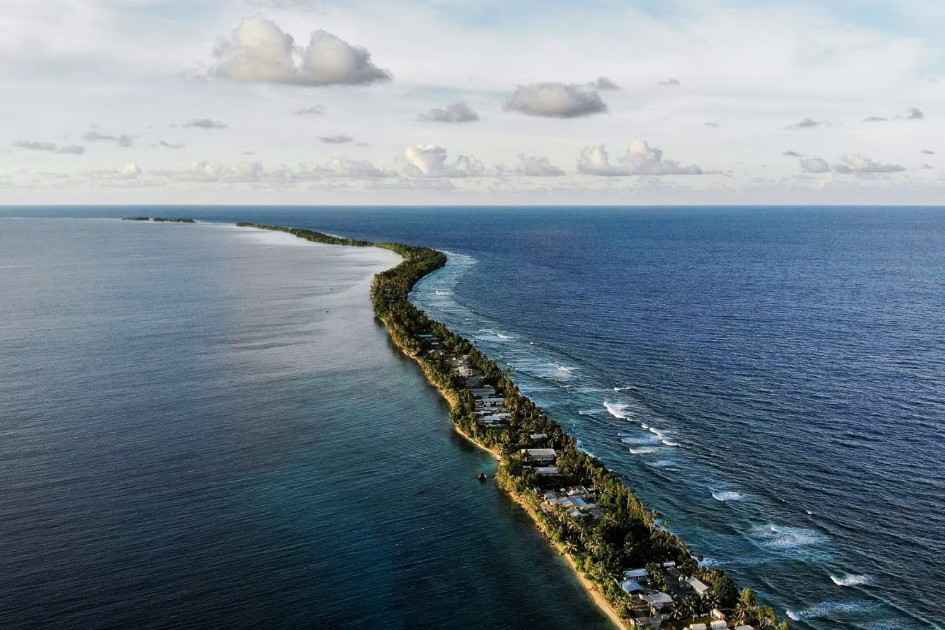
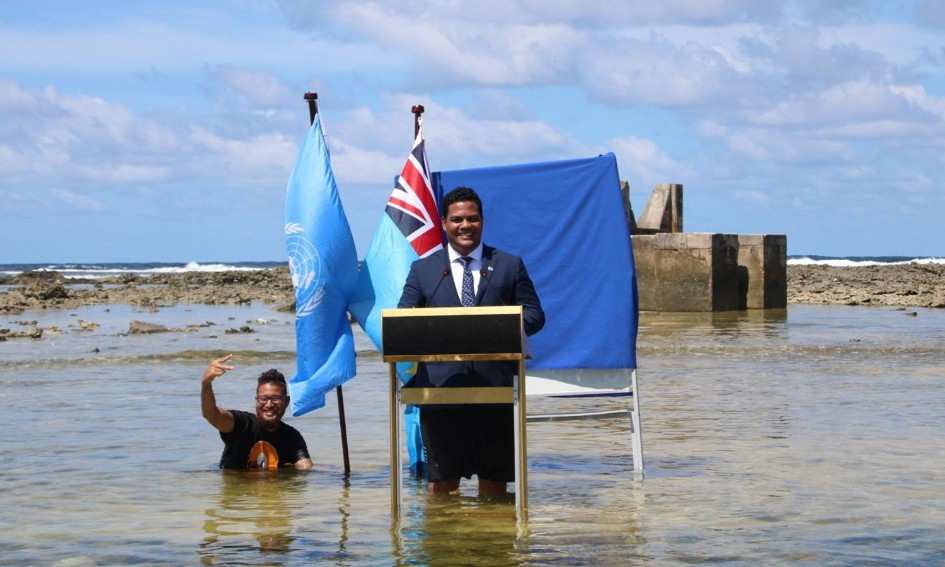
Tuvalu faces an existential threat from sea-level rise. Much of the country sits only a few metres above sea level and officials warn that by 2050 large parts could be underwater at high tide.

Tuvalu is an island with a population of about 11,000 people and its highest point is just 4.5 metres (15ft) above sea level. Since 1993, sea levels have risen about 0.5cm (0.2in) a year, according to a 2011 Australian government report.
NASA scientists project that daily tides could submerge around half of Funafuti atoll, home to about 60 percent of Tuvalu’s population, under current warming trends.
While the government continues investing in adaptation, it has also turned to planned migration to safeguard its people, culture and political future. Manipua Puafolau, a trainee pastor from Funafuti, arrived earlier this month and plans to settle in the South Australian town of Naracoorte, where many Pacific Islanders work in agriculture and meat processing.
“For the people moving to Australia, it is not only for their physical and economic well-being, but also calls for spiritual guidance,” Puafolau said in a video released by Australia’s foreign affairs department.
Australian Foreign Minister Penny Wong said the arrivals marked a new model for climate displacement. “The visa offers mobility with dignity by providing Tuvaluans the opportunity to live, study and work in Australia as climate impacts worsen,” she said.
Australia is establishing support services for Tuvaluan families in Melbourne, Adelaide and Queensland to help them resettle.
Kitai Haulapi, Tuvalu’s first female forklift driver, plans to move to Melbourne, saying she hopes to find work and send money home reported NBC News. Dentist Masina Matolu will relocate with her children to Darwin, where she hopes to work with Indigenous communities.
“I can always bring whatever I learn new from Australia back to my home culture,” she told NBC News.
Tuvalu Prime Minister Feleti Teo last month visited Tuvaluan communities in Australia, urging migrants to maintain cultural and national ties even as they settle abroad, officials said.
Although often described as “climate refugees,” the migrants do not receive formal refugee status, as international law does not recognise climate change as grounds for protection under the 1951 Refugee Convention.
Legal experts say the pact nonetheless breaks new ground by explicitly affirming Tuvalu’s continued sovereignty even if rising seas reduce its habitable land.
The agreement is being closely watched in South Asia, where climate-driven displacement is already occurring at scale. Nearly 9.2 million people were displaced by disasters across the region in 2024, according to the Norway-based Internal Displacement Monitoring Centre (IDMC).
Bangladesh alone recorded about 2.4 million disaster-related internal displacements in 2024, ranking fifth globally. Floods, cyclones, river erosion and salinity intrusion are forcing hundreds of thousands from their homes each year, most relocating internally to towns and informal urban settlements.
“Internal displacement in Bangladesh is largely driven by climate change-induced disasters,” said Md Shamsuddoha, chief executive of the Center for Participatory Research and Development (CPRD). “The challenge is not only the growing frequency of such events but whether the state can effectively manage them.”
Climate journalist Shamsuddin Illius, who received the Climate Journalism Award 2023 for the cross-border investigation “The Sinking Cities Project,” said the Tuvalu pact is only a temporary solution for the island nation’s population and cannot address the root causes of displacement.
“The only real solution is preventing further warming by cutting global emissions, but emissions are still rising,” he said. “Until that changes, the world’s smallest and most vulnerable countries will continue to pay the biggest price.”
Experts say Bangladesh, while not facing complete territorial loss like Tuvalu, illustrates the scale of climate mobility without legal recognition or cross-border pathways.
“The Australia–Tuvalu pact shows what is missing for countries like Bangladesh: shared responsibility, international recognition and forward-looking mobility arrangements,” said Sohanur Rahman, executive coordinator of YouthNet Global. “Climate-induced displacement is not just a mobility issue, it is a human rights issue about dignity and justice.”
As the first Tuvaluans begin building new lives in Australia, governments and climate advocates say the experiment will test whether the world can move beyond ad hoc responses towards planned, cooperative solutions for climate migration in a warming world.




