

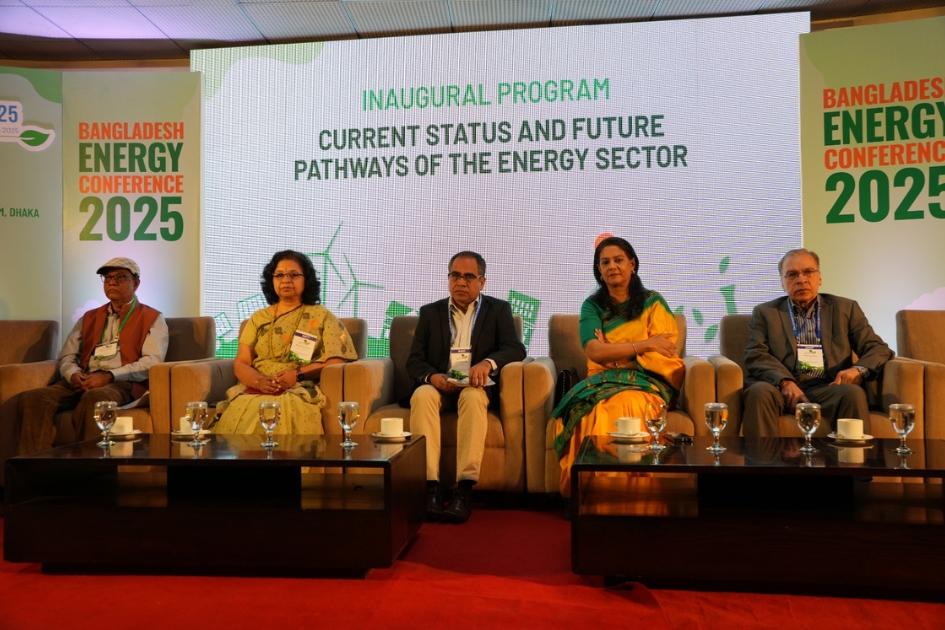



Rizwana Hasan opens 3rd Bangladesh Energy Conference as calls grow for realistic transition roadmap
Bangladesh experts at the 3rd Energy Conference urge a swift overhaul of the national masterplan to boost renewables, calling for realistic targets, reduced reliance on foreign consultants, stronger local capacity, and a just, transparent transition centred on communities and long-term sustainability.
Experts at the 3rd Bangladesh Energy Conference 2025 have called for an urgent revision of the Integrated Energy and Power Master Plan to significantly increase the share of renewable energy in the national power mix. The three day event opened at the Bangladesh Military Museum in Dhaka with Syeda Rizwana Hasan, Advisor to the Ministry of Environment, Forest and Climate Change, inaugurating the conference as chief guest.
In her remarks, Rizwana Hasan said that Bangladesh’s energy transition is a long term process that requires practical and achievable targets. She noted that although multiple policies and programs have been initiated to expand renewable energy, past goals often remained unfulfilled. “The priority should not just be setting targets but achieving them. In the past, ambitious targets were set, but renewable electricity generation remained minimal. Therefore, a realistic and implementable roadmap is crucial,” she said. She added that a government program to install solar panels on the rooftops of all government buildings is progressing rapidly.
The conference, held from 6 to 8 December, brings together policymakers, researchers, civil society representatives, and energy specialists to examine Bangladesh’s current challenges and future pathways for a just transition.
The inauguration was hosted by Monowar Mostafa, Executive Member of the Bangladesh Working Group on Ecology and Development, and chaired by Professor Kazi Maruful Islam, Coordinator of BWGED. Islam stressed the importance of keeping energy transition a key priority in upcoming electoral commitments.
Dr. Khandakar Golam Moazzem, Research Director at the Centre for Policy Dialogue, said that effective energy transition depends on the integration of technical expertise, strong policy frameworks and skilled human resources. He emphasized the need to reduce reliance on foreign consultants and to strengthen domestic institutional capacity to ensure full ownership of policy implementation.
Professor Shahriar Ahmed Chowdhury, Chairman of the Centre for Renewable Energy Services Limited, highlighted that the government spends 4 billion dollars annually on electricity subsidies. He said that allocating even half of this to renewable energy could transform the sector. He warned that current electricity policies are not conducive to renewable expansion and must be addressed within the revised master plan in alignment with domestic expert recommendations.
Transparency International Bangladesh Executive Director Iftekharuzzaman pointed to malpractices in the energy sector and criticised previous governments for allowing policy level irregularities. He said that master plans prepared by foreign consultants such as JICA have historically failed to protect the interests of renewable energy. He urged greater involvement of local experts in planning.
Advocate Shimonuzzaman, Research Director of LEAD Bangladesh, underscored the importance of legal transparency and accountability to ensure a just transition. He said that beyond technological considerations, public participation and the protection of marginalised communities must be prioritised.
Banshree Mitra Niyogi of Manusher Jonno Foundation highlighted the need to centre the voices of marginalised communities in the transition process. She said that women’s participation and resource allocation in the energy sector require clear definition and support.
Bangladesh stands at a critical point in its energy development. Since the first Bangladesh Energy Conference in April 2023, the country has made progress in policy reform, renewable investment, technology adoption, public engagement and climate risk management. The second conference in December 2024 drew more than 400 participants. Over the past year, key steps include a halt on approvals for new fossil fuel power plants, a 10 year tax exemption for renewable energy, tenders for 5,238 megawatts of solar projects and the adoption of 3,000 megawatts of rooftop solar initiatives. At the same time, rising LNG imports have increased foreign exchange pressures, reinforcing calls for a sustainable long term energy roadmap.
Organised by BWGED with support from 16 national partner organisations, the 3rd Bangladesh Energy Conference aims to help shape the future of energy policy, renewable investment, technological advancement, community engagement and climate resilience in the country. Rizwana Hasan said the event plays a pivotal role in strengthening Bangladesh’s transition efforts and ensuring greater alignment with national priorities.




