

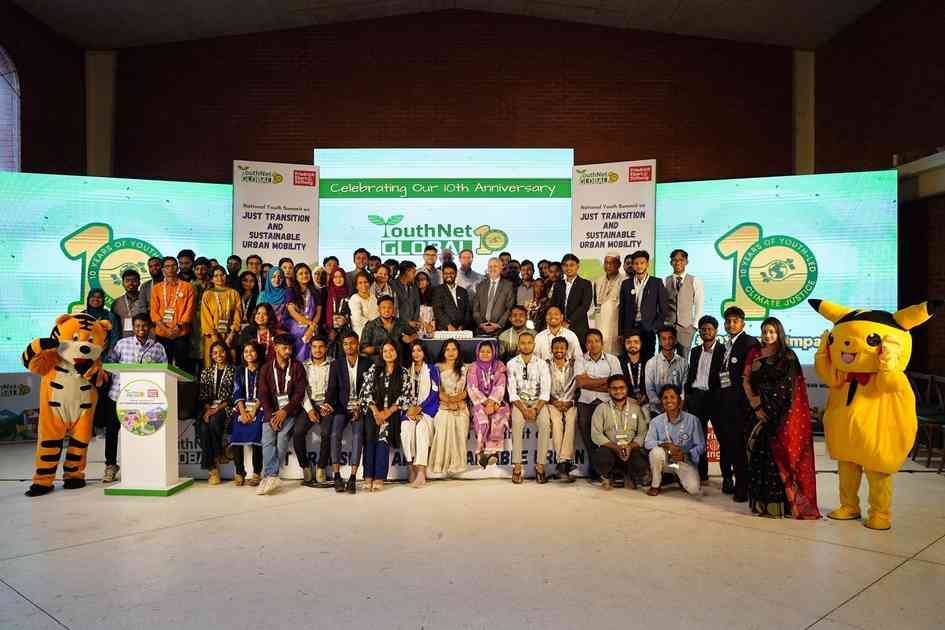



EU Ambassador Michael Miller called for inclusive investment, long-term planning and youth participation to support Bangladesh’s transition towards clean, safe, low-emission and climate-resilient urban transport systems.
Speaking at the National Youth Summit on Just Transition and Sustainable Urban Mobility in Bangladesh in Dhaka, Miller said future transport solutions must protect workers, vulnerable communities and future generations while supporting the country’s climate ambitions.
The summit, organised by YouthNet Global in partnership with Friedrich-Ebert-Stiftung (FES) Bangladesh at the Aloki Convention Centre on June 16, brought together around 150 participants including youth leaders, policymakers, climate experts, diplomats, development practitioners, academics and trade union representatives.
The event took place as Bangladesh moves forward with implementation of its updated Nationally Determined Contribution (NDC 3.0) and prepares for COP31.
Participants noted that Bangladesh’s latest climate plan includes a dedicated focus on just transition, while NDC 3.0 identifies transport as a priority sector for reducing emissions through electrification, modal shifts and improved infrastructure.
Addressing the concluding session, Miller congratulated YouthNet Global on its 10-year journey, saying its work on climate resilience, renewable energy and the circular economy closely aligns with priorities under EU-Bangladesh cooperation.
He said the summit reflected a growing culture of co-creation in which young people are increasingly contributing to policymaking.
“Young voices are being asked not just to speak but being listened to,” Miller said, stressing that meaningful youth participation is essential for effective decision-making.
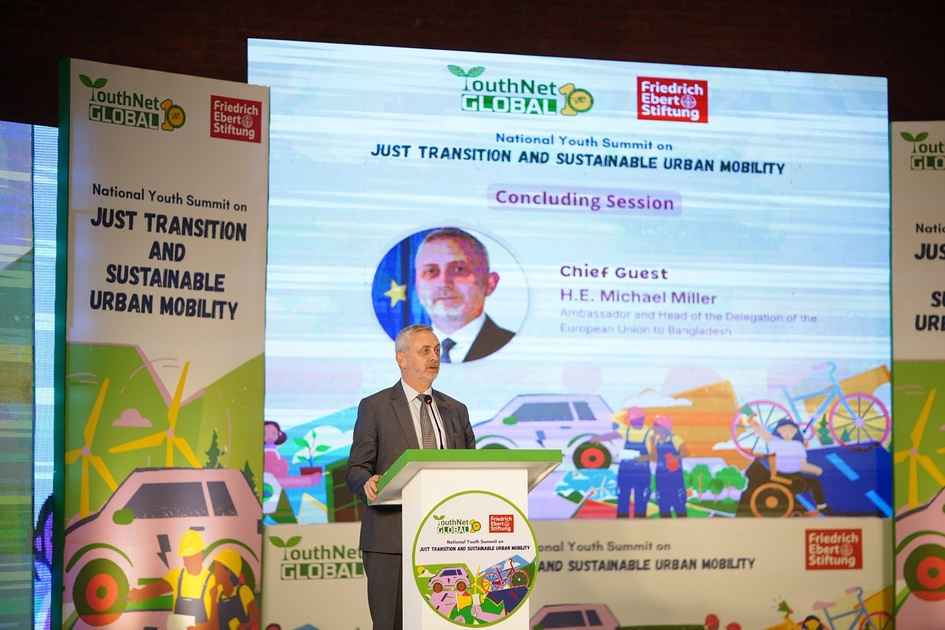
Highlighting mounting urban challenges, the EU ambassador said rapid urbanisation is placing growing pressure on transport systems, particularly in Dhaka.
He said current decisions on electrification, mass transit and integrated urban planning will influence the quality of life of millions of Bangladeshis for decades.
Describing urban mobility as central to economic growth, climate resilience and social wellbeing, Miller warned that traffic congestion carries a significant economic cost at a time when Bangladesh aims to become a trillion-dollar economy by 2034.
He said transport remains a major pillar of the European Union’s Global Gateway strategy, which supports sustainable infrastructure development worldwide.
Miller highlighted cooperation involving the European Investment Bank and EU member states to strengthen Bangladesh’s transport sector, including rail connectivity and electrification initiatives.
Referring to proposed support for an electrified railway corridor linking Narayanganj, Dhaka and Gazipur, he said climate-related decisions must not be delayed.
“Decisions cannot be put off in our common race to limit the impact of climate change,” he said.
Emphasising inclusiveness, Miller said urban transport is fundamentally about shared public space and should serve transport workers, operators, commuters, women, children and persons with disabilities.
He said the shift towards cleaner transport must also guarantee decent work, skills development and livelihood protection for millions of people dependent on the sector.
The ambassador also highlighted EU collaboration with BRAC to improve women’s safety in public transport and urban spaces, adding that future transport systems should be safe, accessible, affordable, smart, resilient and low-emission.
The summit was inaugurated by Mohammad Navid Safiullah, Additional Secretary of the Climate Change Wing at the Ministry of Environment, Forest and Climate Change, who attended as chief guest.
Opening the event, Dr Felix Gerdes, Resident Representative of FES Bangladesh, underscored the importance of inclusive dialogue and multi-stakeholder cooperation in addressing urban mobility and environmental challenges.
Setting the context for the discussions, Sohanur Rahman, Executive Coordinator of YouthNet Global, said young people must play a meaningful role in shaping climate and transport policies.
“Young people must be meaningfully involved in shaping transport policies if Bangladesh is to achieve a just and sustainable transition,” he said.
Delivering the keynote address, Dr Md Hafizur Rahman, Professor and Head of the Department of Environmental Science at Independent University, Bangladesh, highlighted the importance of youth leadership in creating a low-carbon, equitable and climate-resilient transport system.
He said sustainable mobility and climate resilience must advance together to support inclusive urban development.
Government officials, academics, youth leaders and workers identified key barriers to transforming Bangladesh’s urban transport system, including infrastructure gaps, weak governance, pollution and limited participation of vulnerable communities.
During a panel discussion titled “Urban Resilience, Governance and Green Infrastructure”, speakers explored issues including public transport reform, air pollution, green infrastructure, labour rights and the need for stronger public participation in transport-related decision-making.
Nayoka Martinez-Bäckström, First Secretary and Deputy Head of Development Cooperation at the Embassy of Sweden, shared lessons from South American cities and called for a new approach to urban mobility in Bangladesh.
She stressed the importance of planning for electric buses, improving footpaths and promoting cycling as part of greener and more resilient transport systems.
Martinez-Bäckström said infrastructure expansion alone cannot solve Dhaka’s congestion crisis, arguing that flyovers do not address the underlying mobility challenges.
She also said transport planning must prioritise vulnerable road users including women, children, pedestrians and older people, ensuring safety remains at the centre of future mobility systems.
Environmental expert Dr Ahmad Kamruzzaman Majumder, Professor of Environmental Science at Stamford University Bangladesh, raised concerns over weak regulatory enforcement and continued reliance on fossil fuels in urban transport.
He called for stronger fuel standards, improved environmental governance and greater accountability to curb transport-related pollution.
Farzana Faruk Jhumu, youth and climate advocate and a member of the UN Secretary-General’s Youth Advisory Group on Climate Change, stressed the need for meaningful youth participation in policymaking.
She criticised recent increases in bicycle prices, saying such measures undermine efforts to encourage environmentally friendly transport.
“Youth engagement in policymaking is often very limited. In many cases, young people are invited only after the policy preparation process has already been completed,” she said.
Jhumu called for youth involvement from the earliest stages of policy development.
Trade union representative Nahidul Hasan Nayon highlighted challenges faced by transport workers, including the lack of reliable data, limited consultation and insufficient protections during sectoral transitions.
“We do not even have a proper socio-demographic database of transport workers,” he said.
Nayon called for comprehensive data collection, stronger labour protections and improved opportunities for skills development, arguing that workers must be included in transport reforms to ensure a fair transition.
He also urged stronger consultation mechanisms during major infrastructure and policy decisions.
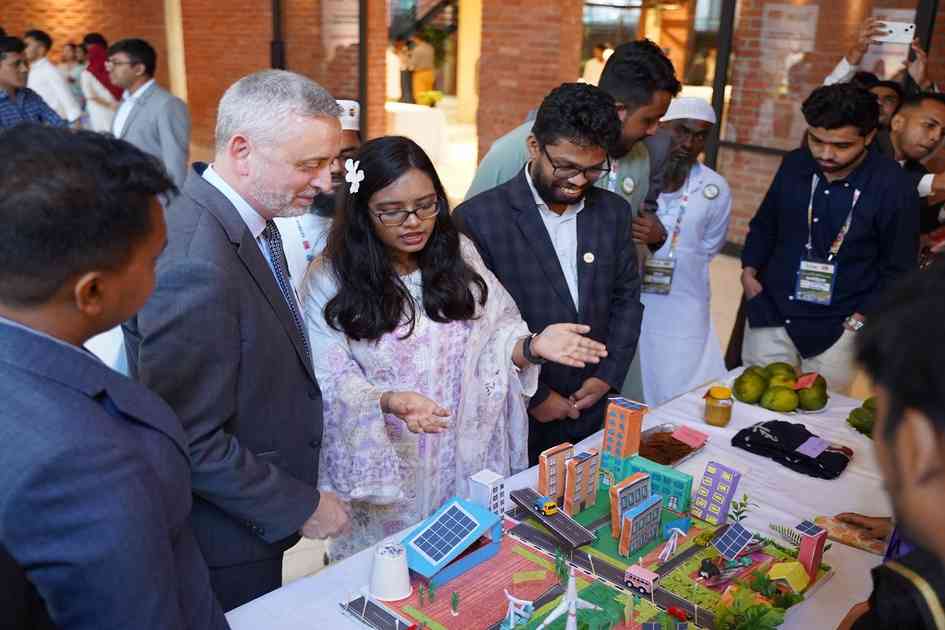
Beyond policy discussions, the summit featured interactive activities aimed at turning dialogue into action.
Participants visited exhibition stalls showcasing youth-led green transport innovations and cultural exhibits representing Bangladesh’s eight divisions, highlighting local perspectives on sustainability, mobility and climate resilience.
A Green City Lab facilitated by Amir Hamza Xihad, Founder of MakaTeam, engaged participants through a gamified learning session exploring sustainable transport solutions and greener urban development.
The Youth Policy Lab, facilitated by Aruba Faruque, Deputy Executive Coordinator of YouthNet Global, brought together youth leaders, transport workers and other stakeholders to co-create policy recommendations on sustainable urban mobility, workers’ rights and climate justice.
The recommendations were presented during the summit’s concluding session.
Throughout the event, young participants played a central role in discussions, innovation activities and policy formulation exercises, identifying practical pathways for cleaner transport, stronger worker protections and greater youth participation in climate governance.
Participants said Bangladesh’s urban transport sector continues to face major challenges including severe congestion, hazardous air pollution, dependence on fossil fuels, weak enforcement of vehicle standards and fragmented governance.
The summit concluded with a shared recognition that transforming Bangladesh’s urban transport system must go beyond reducing emissions.
Speakers said the transition should create safer streets, protect workers’ livelihoods, improve access for vulnerable communities and ensure that young people remain active partners in building a just and climate-resilient urban future.




