




Bangladesh’s FY2026–27 budget proposes BDT 17,345 crore for energy, focusing on renewable expansion, offshore gas exploration, grid modernisation, fuel security and efficiency reforms to reduce import dependence.
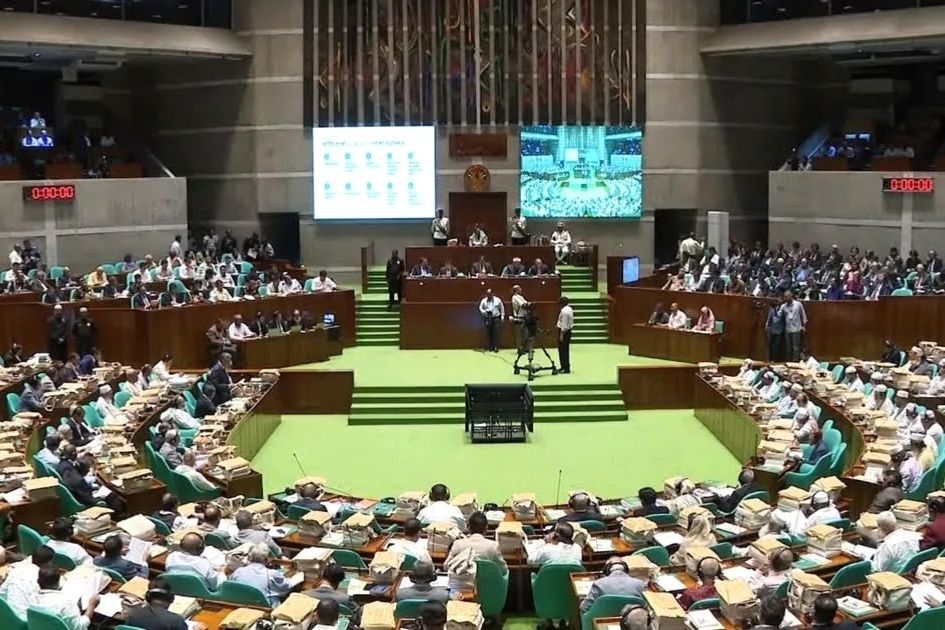
The government has proposed an allocation of BDT 17,345 crore for the power and energy sector in the FY2026-27 national budget, marking an increase of BDT 393 crore from the previous fiscal year, according to budget documents placed in parliament on Thursday.
The allocation prioritises energy security, efficiency improvements, renewable energy expansion and offshore gas exploration as part of a broader strategy to reduce import dependency and stabilise long-term supply.
Finance and Planning Minister Amir Khusru Mahmud Chowdhury, while presenting the budget, said uninterrupted and affordable electricity remains central to industrial growth and overall economic activity.
He noted that inefficiencies, irregularities and heavy reliance on imported fossil fuels in previous years have significantly increased generation costs, while capacity charge liabilities and contractual imbalances have further strained the sector. He added that subsidies have exceeded BDT 40,000 crore in the current fiscal year due to the widening gap between production costs and retail tariffs.
According to budget documents, reforms have been initiated across generation, transmission and distribution with a focus on least-cost power generation and strengthened monitoring to ensure transparency and accountability. Inefficient power plants are being phased out or upgraded, while capacity charge agreements are under review to ensure financial discipline.
Authorities said modernisation of the power network is underway through smart grid and digital monitoring systems, including SCADA, GIS and AMI technologies, aimed at reducing system losses and improving supply reliability. Electrification is also being expanded in remote, char and island areas under special programmes.
The proposal also includes upgrading urban distribution systems through underground transmission lines and substations in metropolitan areas as part of long-term infrastructure modernisation.
On renewable energy, the government has set targets to generate 20 percent of electricity from renewable sources by 2030 and 30 to 50 percent by 2050. The policy package includes expanded rooftop solar programmes, utility-scale solar projects, coastal wind energy assessments, waste-to-energy initiatives and preparation of a National Energy Storage Roadmap.
The budget introduces a consolidated incentive package for renewable energy, including tax exemptions for renewable energy production until 2035, duty-free imports of solar equipment inputs and a 5 percent tax rebate for consumers using renewable electricity. Tax exemptions for lithium-ion battery manufacturing have also been extended until June 2030 to support domestic energy storage production.
The government is also encouraging private sector participation and PPP investment in renewable energy infrastructure, alongside incentives for local manufacturing of solar panels, wind turbines and battery systems.
Officials said these measures aim to accelerate the transition toward a more diversified and technology-driven energy system.
On the supply side, authorities noted that declining domestic gas production and rising LNG import costs have increased exposure to global price volatility. In response, the government is prioritising diversification of energy sources and strengthening exploration both onshore and offshore.
A major offshore bidding round has been launched to attract international oil companies for gas exploration in the Bay of Bengal. The revised Production Sharing Contract (PSC) framework has been introduced and 24 offshore blocks covering shallow and deep-sea areas have been opened for international bidding.
State-owned Bangladesh Petroleum Exploration and Production Company Limited (BAPEX) has been assigned an expanded exploration programme, including 270 km of geological surveys, 700 line-km of 2D seismic surveys and 700 sq km of 3D seismic surveys between FY2025-26 and FY2027-28. The company is also set to drill 69 wells and carry out workovers on 31 existing wells.
BAPEX is also set to procure two new exploration rigs to strengthen domestic capacity. The government has additionally prioritised critical mineral exploration and unconventional hydrocarbon resources under its wider energy strategy.
Authorities said strategic fuel storage capacity is being expanded alongside LNG infrastructure development, including additional floating storage and regasification units in Moheshkhali and a planned land-based LNG terminal in Matarbari.
Pipeline infrastructure spanning more than 601 km is being optimised to improve fuel transportation efficiency. In parallel, plans are underway for a 5 million-tonne crude oil refinery in Chattogram and a second Eastern Refinery with a capacity of 3 million tonnes.
Smart fuel distribution monitoring systems have been introduced for more than 2,700 tank lorries to improve transparency and efficiency in fuel logistics.
Coal production is projected at 600,000 metric tonnes, while stone extraction is targeted at 1.4 million metric tonnes for FY2026-27. Expansion of coal mining is also planned through Phase II of Barapukuria and development of the Dighipara coalfield.
Officials said geological assessment of heavy minerals such as zircon and monazite in river basins is ongoing to evaluate their economic potential.
Overall, the energy strategy reflects a structural shift toward a more balanced mix of domestic resources, renewables, nuclear energy and imported fuels, aimed at strengthening long-term energy security and reducing vulnerability to external shocks.




