




For the first time, Bangladesh’s Manta boat-dwelling fishers are registered to vote, seeking recognition and urgent action as climate change, river pollution and poverty endanger their livelihoods.
At first light on the rivers of southern Bangladesh, wooden boats drift quietly as fishing nets are checked and children stir awake beneath plastic tarpaulins. For generations, this floating existence has defined the lives of the Manta people, a landless fishing community born on boats, married on boats and, until recently, invisible to the state.
This year, that invisibility began to lift.
Nearly 400 members of the Manta community from 179 families in Laharhat village under Tungibaria Union in Barisal district have been registered as voters for the first time, according to local election officials. As Bangladesh prepares for its next national parliamentary election, these newly registered voters are preparing to cast ballots in what many describe as a historic step toward political recognition after decades of exclusion.
For the Manta, however, voter registration is about far more than electoral participation. It is inseparable from the country’s deepening climate crisis, environmental degradation and the daily struggle for survival faced by communities living on the frontlines of ecological change.
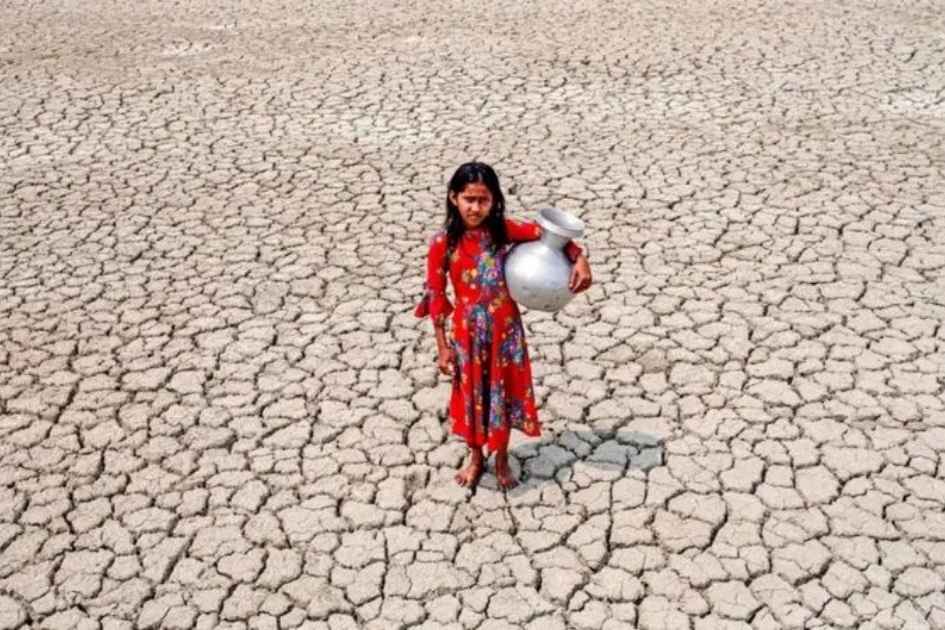
The Manta depend entirely on rivers for their livelihoods, relying on fishing as their primary source of food and income. But climate change has altered river behavior across Bangladesh. Erratic rainfall, stronger currents, unpredictable floods and river erosion have made life on the water increasingly dangerous. At the same time, industrial effluents, plastic waste and untreated sewage have polluted rivers, sharply reducing fish stocks.
“We are fishermen, but the river no longer feeds us like before,” said Samiran Bibi, 60, who has spent her entire life on boats. “Some days we do not know how we will eat. Even after death, finding a burial place is a struggle for us.”
Shrinking catches have pushed many families into chronic food insecurity, forcing children into work and cutting off access to education. Women face additional burdens, managing households in unstable conditions with limited access to healthcare or sanitation. Without land ownership or formal addresses, most Manta people were previously unable to obtain national identity cards, excluding them from healthcare, social protection programs and disaster relief.
Alamgir, a newly registered voter, said the lack of identification had shaped every aspect of life. “When we traveled to the mainland, we were often harassed because we could not prove who we were,” he said. “Now, with a national ID card, I can finally show my identity.”
Community leader Jasim Sardar said registration has given people hope that long-standing problems may finally be addressed. “Our priorities are basic,” he said. “Safe drinking water, sanitation, healthcare, education for our children, protection from river pollution and livelihoods that can survive climate change.”
Advocacy groups say the registration of the Manta reflects a broader push to include marginalized communities in democratic processes, particularly as climate impacts intensify across Bangladesh.
“This is not just a political act,” said Sohanur Rahman, executive coordinator of YouthNet Global, a youth-led organization working on climate justice. “It is recognition of dignity, survival and voice in decisions that affect their lives.”
Bangladesh, a low-lying delta nation of more than 170 million people, is widely considered one of the countries most vulnerable to climate change. Rising temperatures, floods, cyclones, salinity intrusion and river erosion already affect millions each year, placing pressure on food systems, public health and livelihoods.
A study published in Nature Sustainability by researchers from the University of Oxford warned that if global temperatures rise 2 degrees Celsius above pre-industrial levels, Bangladesh could be among the six countries most exposed to extreme heat by 2050. Prolonged heat stress, the study said, could undermine public health, labor productivity and economic stability.
Environmental risks are compounded by severe pollution. Dhaka regularly ranks among the world’s most polluted cities for air quality, while rivers across the country suffer from industrial discharge, tannery waste and informal recycling activities that release toxic substances such as lead. Health experts warn that rising temperatures, air pollution and toxic exposure are increasing the spread of climate-sensitive diseases such as dengue.
“Climate change in Bangladesh is no longer a future risk. It is a present-day emergency,” said Syeda Rizwana Hasan, adviser to the ministries of environment, forest and climate change, water resources and information. “It is affecting public health, livelihoods and human dignity.”
As the country approaches a pivotal election, environmental accountability has emerged as a growing public concern, particularly among young voters. Civil society organizations are urging political parties to move beyond broad promises and outline clear, enforceable plans to protect ecosystems and people.
Political parties have begun responding, though with varying degrees of clarity.
The Bangladesh Nationalist Party (BNP) released its 31-point reform outline on July 23, 2023. In its 29th point, the party pledged to adopt sustainable strategies to address climate-related loss and damage and to strengthen institutional capacity to respond to floods, cyclones, storm surges and earthquakes. Under its “Plan to Build the Nation” platform, BNP has also committed to planting 250 million trees within five years, a move supporters say could help reduce heat stress.
BNP Chairman Tarique Rahman has said that if the party comes to power through the people’s vote in the 13th national parliamentary election, it will dig 20,000 kilometers of canals nationwide to address waterlogging and drainage problems, citing the canal excavation program initiated by former president Ziaur Rahman.
In contrast, Bangladesh Jamaat-e-Islami, a key partner in the 10-party opposition alliance, announced its own 31-point framework at a policy summit on Jan. 20, 2026. While the document addresses a range of socio-economic challenges, it does not clearly articulate commitments on environmental protection, climate adaptation, air quality management or pollution control. Observers expect the framework to form the basis of the party’s election manifesto.
Another alliance partner, the Jatiya Nagorik Party, has yet to publish any policy outline or manifesto and no official position on climate governance is currently available.
The National Citizen Party (NCP), however, has unveiled its manifesto ahead of the election, placing young people and dignity at the center of its political vision. Titled Manifesto of Youth and Dignity, the document outlines 36 pledges addressing poverty, environmental degradation and sustainable development.
Announced at an event in Dhaka’s Gulshan area, the manifesto commits to zero tolerance against industrial pollution, river and canal encroachment and environmental destruction through stricter enforcement of laws. It promises mandatory effluent treatment plants in all industries, tax incentives for compliance, closure of polluting brick kilns, promotion of clean transport and a significant expansion of renewable energy. The party aims to generate at least 25 percent of electricity from renewable sources within five years and introduce electric vehicles in 40 percent of government procurement.
Political leaders across the spectrum acknowledge that past development has often come at an environmental cost.
Dr. Mahdi Amin, adviser to the acting chairman of BNP, said earlier development projects had caused damage. “BNP will not include any development agenda in its manifesto that risks environmental destruction,” he said, citing plans to revive nationwide afforestation.
Bangladesh Revolutionary Workers Party General Secretary Saiful Haque called for cross-party cooperation on climate action, urging voters to reject candidates who exploit natural resources.
Others cautioned that commitments must translate into implementation. “Policy commitments alone will not deliver results without responsible action,” said Ehsanul Mahbub Jubayer of Bangladesh Jamaat-e-Islami.
Policy analysts say environmental responsibility should not rest solely with the party in power. Under the July Charter, opposition parties are expected to play a decisive role in parliamentary oversight, making climate action, environmental regulation and public health protection a shared political obligation.
“Environmental justice must include clean air, safe water, toxin-free communities and a just industrial transition that protects workers,” said Sohanur Rahman. “This cannot be treated as a single-party issue.”
Millions of Bangladeshis already face unsafe drinking water due to salinity intrusion, arsenic contamination and industrial discharge. Without decisive action on climate change, air pollution, water security and industrial regulation, analysts warn that development gains could become unsustainable.
As Bangladesh stands at a critical political juncture, environmental experts and civil society voices are urging all political parties to clearly explain how they will reduce heat risks, ensure safe water, control industrial pollution and protect communities most exposed to climate shocks.
“The warning from scientists is stark,” adviser Rizwana Hasan said. “Without climate-conscious and pollution-aware governance, economic recovery and sustainable development will remain out of reach.”
For families living on the water in Barisal, casting a ballot for the first time is both a milestone and a message. Those bearing the brunt of climate change say they can no longer remain unseen and neither can the silence of political manifestos on the crisis shaping their lives.




