

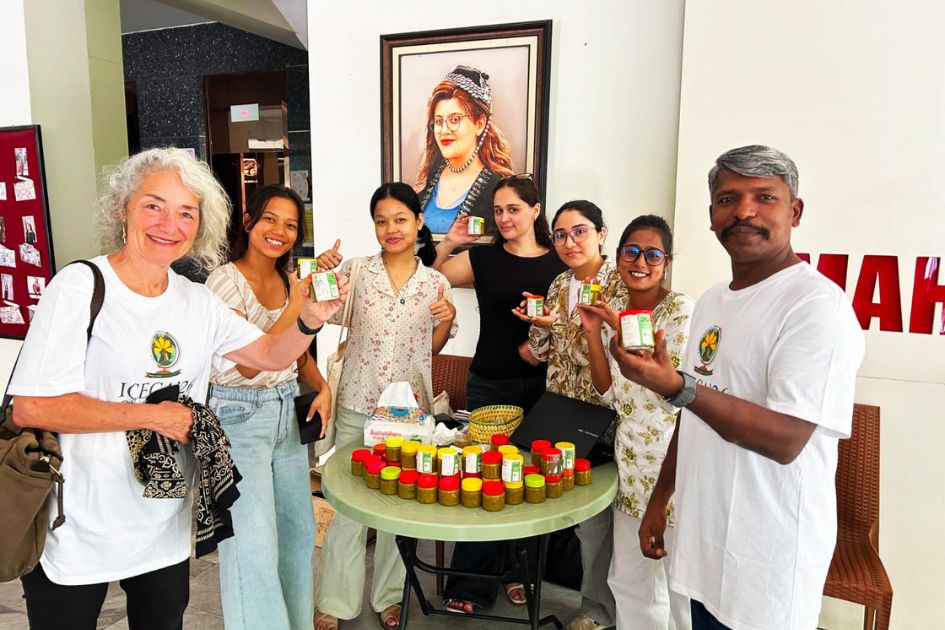



The AUW Green Bangle Project links coastal women, student entrepreneurs and mangrove conservation by turning seasonal Keora fruit into marketable products and sustainable livelihoods.
A project led by the Asian University for Women (AUW) is supporting coastal women in Bangladesh to process and market Keora, a seasonal mangrove fruit, while involving university students in sales and entrepreneurship activities linked to environmental conservation.
The AUW Green Bangle Project supports the processing, marketing and commercialisation of products made from locally harvested Keora, known as the mangrove apple and scientifically as Sonneratia apetala. The initiative connects producers in remote coastal areas with wider urban markets while bringing together women’s economic participation, student entrepreneurship and biodiversity preservation.
Keora grows abundantly along brackish coastal waters and mangrove belts in coastal Bengal. Traditionally used as a modest wild flavour enhancer in local dishes, the fruit has also been the subject of research highlighting its bioactive, medicinal and pharmaceutical value.
The fruit contains dietary organic acids, Vitamin C and bioactive polyphenols and flavonoids including quercetin and ferulic acid. These compounds have antioxidant, antimicrobial and analgesic properties. Pharmaceutical studies have also pointed to its potential in managing blood glucose levels through carbohydrate-splitting enzyme inhibition.
The project turns wild-harvested Keora into products including artisanal pickles, sour condiments and preserves, with local women involved in their preparation and sale.
Dr. Mosae Selvakumar Paulraj, Director of Environmental and Biological Sciences at AUW, said: “Keora Achar is a natural health powerhouse that blends a traditional mangrove delicacy with modern body defense. Sourced from wild Sonneratia apetala trees in the Sundarbans, this tangy pickle is packed with significantly more immune-boosting Vitamin C than everyday citrus fruits. Scientific studies show its intense antioxidant properties actively shield your heart, liver, and kidneys from inflammation and daily cellular damage. By turning this climate-resilient wild fruit into a delicious side dish, it aids digestion, protects your organs, and creates sustainable livelihoods for coastal communities.”
The initiative is based on an ecofeminist approach that links gender equity, community welfare and environmental protection. Coastal women are among those most vulnerable to climate impacts, while also holding generational knowledge of natural resource management and traditional preservation techniques, according to the project.
By providing women with structured opportunities to produce and sell Keora products, the project seeks to increase their financial autonomy and social standing while creating an economic incentive to maintain mangrove forests. The project says healthy, intact mangrove cover produces a richer annual fruit harvest, making coastal women potential guardians against deforestation and land clearing.
AUW students also participate in branding, packaging, market outreach and direct sales. Their involvement provides practical experience in ethical marketing, supply chain logistics and social business models, while sales reports and promotional outreach are used to inform buyers about the reported benefits of Keora and the importance of protecting coastal ecosystems.
The project also incorporates the natural seasonality of the mangrove apple rather than encouraging artificial, year-round industrial production. It promotes the use of the fruit according to its seasonal ecological cycle.
Shaika, Assistant Project Manager of the Green Bangle Project, coordinated the work with Dr. Mosae Selvakumar Paulraj.
Dr. Nanzy Mock, an Associate Professor at Tulane University’s School of Public Health & Tropical Medicine, Global Health Systems and Development, tasted the Keora pickle and liked its taste and flavour.




