




Civil society groups accuse Bangladesh’s interim government of excluding citizens from a long-term energy plan, warning it entrenches fossil fuels, raises costs and threatens climate goals and democratic accountability nationwide.
Civil society groups in Bangladesh on Sunday (February 8) accused the interim government of sidelining citizens and experts in drafting a long-term Energy and Power Sector Master Plan, warning it would lock the country into fossil fuel dependence and deepen economic and environmental risks.
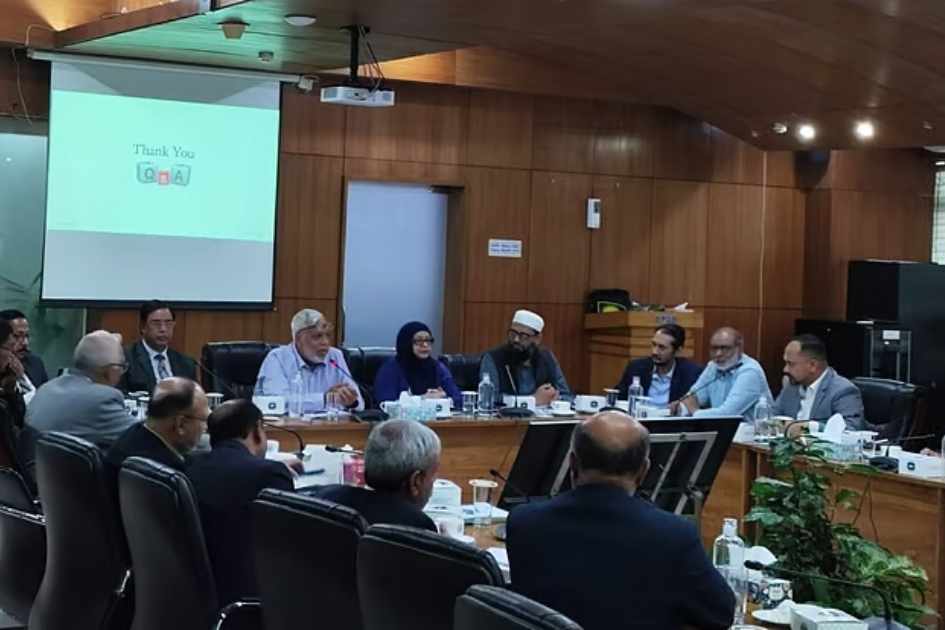
The concerns were raised at a stakeholder consultation on the Energy and Power Sector Master Plan 2026 held in Dhaka under the Ministry of Power, Energy and Mineral Resources. The meeting, chaired by Adviser Muhammad Fouzul Kabir Khan, is part of the process to prepare a 25-year plan covering the period from 2026 to 2050.
Civil society organisations said meaningful public participation was largely absent and alleged that the plan was being finalised without transparency or democratic consultation. They argued that an interim government mandated to manage routine state affairs should not impose a high-risk, long-term energy strategy, particularly in the absence of public hearings despite Supreme Court directions.
Hasan Mehedi, secretary of BWGED, said the draft plan echoed earlier controversial policies used to fast-track projects under special electricity and energy supply provisions. He warned that the EPSMP 2026 was following the same path to legitimise future fossil fuel-based projects.
He said the drafting process had completely ignored the public, civil society and independent experts, adding that no open consultation had been held. According to him, the plan repeated opaque and liability-free policymaking seen under previous authoritarian governments.
Although the draft promotes an energy transition, civil society groups said renewable energy would account for only 17 percent of actual generation, despite being presented as 44 percent on paper. The plan proposes raising gas-based generation capacity from 15.8 gigawatts to 25.2 gigawatts. Even after 25 years, dependence on liquefied natural gas, coal and oil would remain at 50 percent, they said, posing risks to national energy security and the economy.
The plan also highlights technologies such as hydrogen, ammonia co-firing and carbon capture and storage, which critics described as expensive and experimental. They warned these options could increase debt, subsidies and environmental damage.
According to projections in the plan, carbon emissions would reach 186.3 million tonnes by 2050. Civil society representatives said this contradicted Bangladesh’s nationally determined contribution targets and the Three Zeroes vision of Nobel laureate Muhammad Yunus of zero poverty, zero unemployment and zero carbon.
They also said the plan largely neglected issues such as worker resettlement, gender justice, agriculture, health, education and the greening of the garment sector.
Munir Uddin Shamim, director for programme evidence and learning at Ethical Trading Initiative Bangladesh, said citizens’ constitutional rights had been violated. He described the plan as fossil fuel dependent and said it ran counter to decarbonisation and renewable energy transition goals, putting the export sector at risk after 2027.
Bareesh Hasan Chowdhury, regional coordinator of Friends of the Earth Asia Pacific, said a national energy master plan prepared just before an election by an interim government without a mandate was unacceptable. He said the draft lacked environmental justice, transparency and recognition of the need for a just and equitable transition away from fossil fuels, warning it could repeat past mistakes that left the energy sector burdened with debt.
Shimonuzzaman, research director at Lawyers for Energy, Environment and Development and a Supreme Court lawyer, said launching another master plan before elections while ignoring civil society was deeply disappointing. He recalled legal battles in 2024 over the Integrated Energy and Power Master Plan to ensure the state met its constitutional and international environmental obligations.
Wasiur Rahman Tanmoy of the Youth and Social Coalition at Manusher Jonno Foundation said no energy master plan could be adopted without women’s participation, noting that women make up 51 percent of the population. He said future policies must explicitly include the rights of women, indigenous peoples, workers, fishers and marginalised communities.
Civil society groups demanded the immediate suspension and cancellation of the EPSMP 2025, a transparent and inclusive national consultation process, a rapid reduction in fossil fuel dependence and a realistic roadmap towards 100 percent renewable energy. They also called for a new plan based on a fair, socially inclusive and environmentally sustainable energy transition.
They warned that if implemented, the draft plan would impose decades of high energy costs, additional taxes and subsidies and irreversible environmental damage on future generations.
To press their demands, BWGED along with CLEAN, Amrai Agami, BELA, CEPR, ETI Bangladesh, JET-Net BD, LEED, Manusher Jonno Foundation, Re-Global, Souhardho Youth Foundation, Safety and Rights Society, Waterkeepers and the Worker-Climate Action Network organised protests at Shahbagh and a press conference on January 17 and 18. Further protests were held across districts nationwide from January 22 to 24 calling for the cancellation of the energy master plan.




