

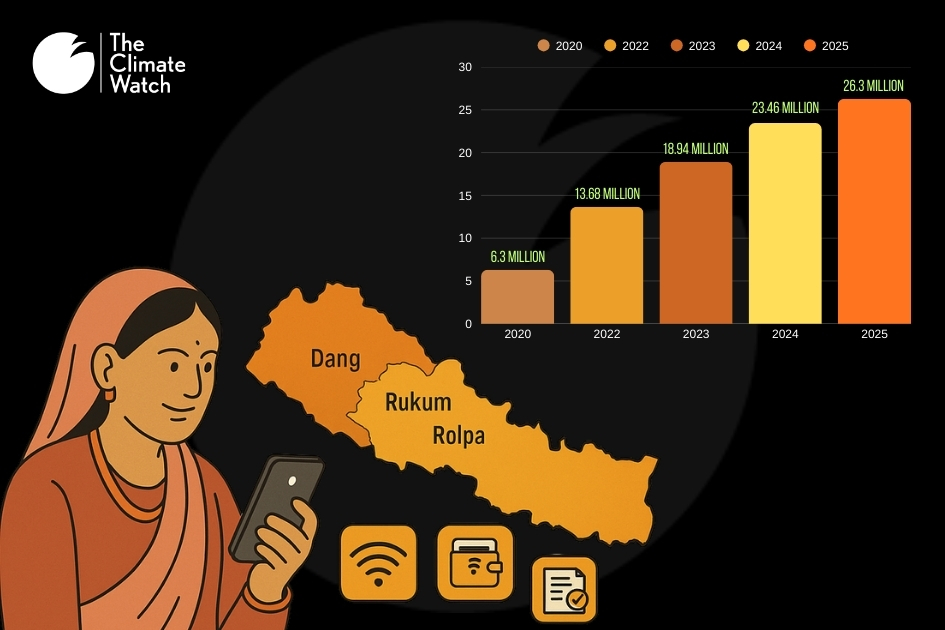



The digital revolution has transformed the lives of people in the remote villages in Nepal
A digital revolution is transforming Nepal’s former Maoist stronghold villages, empowering women and farmers through financial literacy, mobile banking, and technology, reshaping livelihoods and driving social and economic progress.
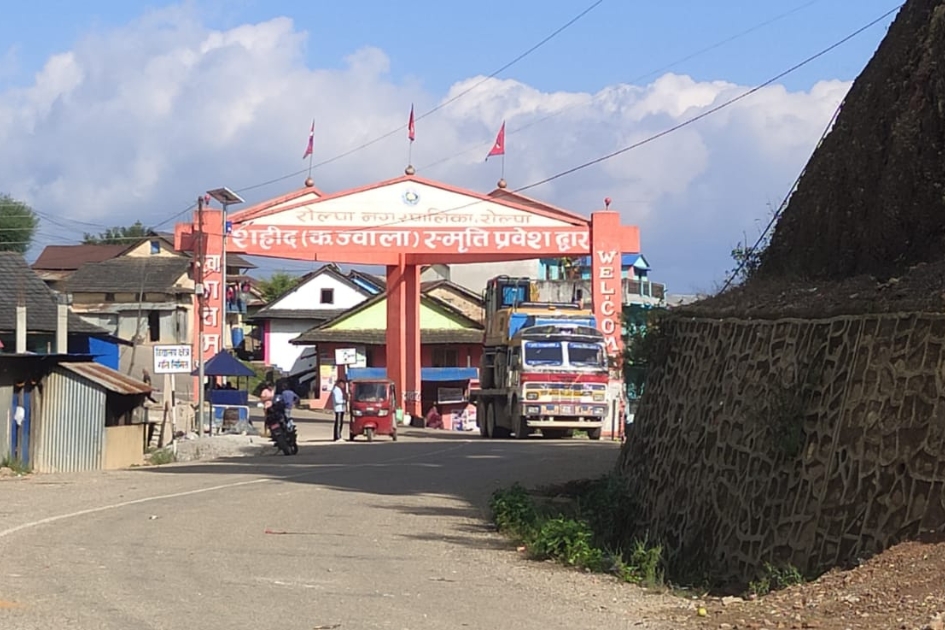
Rolpa and Rukum districts are known as the birthplace of Maoism in Nepal. In 1996, the Maoists began a civil war in the Rolpa district by attacking a police station.
Within five years, the war had spread throughout the country. The Maoists had begun a war regarding people’s issues, such as inequality, poverty, and opportunities. Supporting the Maoist issue, many people participated in the war from Rukum and Rolpa. During the war, many people lost their lives and relatives. The Maoists’ contribution is considered crucial to changing the Nepali regime in 2006. A major role of the Maoist war was to remove the 240-year-long monarchy in Nepal.
Now, the people in those districts have entered the digital age. It has helped improve people’s lives and facilities.
Bhimsari Rokka, 36, from Thawang Rural Municipality-3 in Rolpa, once dreamed of getting a higher education. However, due to her family’s poor condition, she had to work as a shepherd from the age of six instead of going to school. When she was only six months old, her father passed away.
Even though Bhimsari worked as a shepherd, her family managed to send her brother to school. “I wanted my brother to get a good education and become a government officer,” she recalled. Unfortunately, her dream was shattered when Maoists forcefully recruited him as a guerrilla while he was in grade seven. After the peace process began in 2007, he went to a Gulf country in search of better opportunities, but sadly, he died when he fell from a building where he worked.
Thawang is known as the birthplace of Nepal’s Maoist armed struggle, which began in Rolpa in 1996. It was one of the main base areas of the Maoist movement, and people lost their lives during the war. According to Rishikesh Budha Magar, Chairperson of the Thawang Rural Municipality, about 100 people lost their lives during the 10-year-long Maoist insurgency in Thawang.
Bhimsari got married at a young age. Because of poverty, she could not study as a child and spent most of her life struggling with hardship. After marriage, her husband, Parbesh Rokka, taught her how to read and write. Today, Bhimsari is not only literate but also skilled in using technology. Together, she and her husband run a small business that has brought happiness to their lives.
“When I joined a financial literacy class, my life completely changed. It was a turning point for me,” she said.
Through her financial literacy class, she learned how to save money, run an agricultural business, and use modern technology such as digital wallets, mobile banking, and various mobile apps.

Practical Action, in collaboration with local governments, launched the Empowering Women Farmers through Digital Finance, Nepal (Samunati Digital Finance Project) in the backward villages of Rukum, Rolpa, and Dang, targeting women to empower them and improve their quality of life in 2022.
Today, many women in the remote villages of western Nepal, particularly in the Dang, Rukum, and Rolpa districts, have become familiar with mobile banking and digital technology. This growing use of technology has helped them manage their finances, expand their businesses, and ultimately improve their lives.
Cashless Village
Until five years ago, people in the villages had little idea of the internet or of technology such as mobile banking and useful apps. Those living in cities were familiar with these tools and used them regularly. However, over the past five years, even remote villages in Nepal have become cashless communities. Today, if you travel there, you do not need to carry cash. Digital payment has made life much easier.
Ram Kumari Jhakri, from Thawang Rural Municipality-3, Putalikhani, operates a small store in her village. In the past, she had to travel about 130 kilometers, spending an entire day on a bus and carrying large amounts of cash, just to buy goods for her shop. Now, she no longer needs to travel. She simply makes a phone call, prepares a list of items, and sends money through a mobile app.
“I have not traveled to buy goods with cash for the past three years. Everything is done through calls and mobile banking,” she explained. “It has made my life easier and saved time. Before, when I carried cash, I was always afraid.”
She now pays her electricity bills, insurance, and other expenses through mobile apps such as eSewa and Khalti. Earlier, she had to travel to the district headquarters in Liwang, a two-day journey that cost her about NPR 7,000, just to pay a bill of NPR 30.
Ram Kumari also recalled how she once gave NPR 4,000 to someone to pay her electricity bill for a year, but he disappeared without doing so. In another incident, she paid insurance premiums amounting to NPR 265,000 over three years to a local insurance agent she trusted. Later, the insurance office in Liwang informed her that no payments had been made.
“I regularly paid cash to the agent, and he was well known to me, so I believed him,” she said. “But he cheated me and many others in the village. When we complained and demanded a refund, he too disappeared.”
Now, Jhakri helps other villagers pay their electricity bills and insurance premiums using mobile wallets, especially those who are not yet familiar with technology.
Even parents in the village, whose children study in private boarding schools, now use mobile apps to pay monthly school fees. Dil Maya Dasaudi Magar, a mother of two sons studying in Class 5 and Nursery, said,
“I never imagined this technology could help us so much. It has truly made our lives smarter, even in remote villages.”
Technology and Professional Agriculture
In the past, extreme unemployment and poverty in districts like Rukum and Rolpa were among the main reasons behind the start of the Maoist war in Nepal. Today, however, technology is helping transform agriculture into a professional and profitable occupation in these same areas, creating jobs and hope.
Bhimsari Rokka’s husband, Parbesh Rokka Magar, spent 19 years in Saudi Arabia as a laborer. After Bhimsari introduced him to financial literacy and modern agricultural techniques, he decided to return home and start a farming business and a small store.
According to Parbesh, he now earns about NPR 500,000 annually from selling potatoes, beans, and other off-season vegetables.
“We check market prices using a geo-agriculture app,” he said. “If a vegetable is infected by pests or disease, we take a picture and upload it to the app, and it gives us advice on what to do next.”
Through financial literacy classes, many farmers like Parbesh have learned to use mobile apps to improve their farming practices and income. Parbesh and his wife also save NPR 11,000 per month in a local cooperative.
“We could not study, but we want to provide a good education for our children,” he said.
Many other farmers in village areas are benefiting from agriculture-related mobile apps. For example, Shobha Gautam, from Dangisharan-7, Shreegawau, Dang, once noticed her goat was sick and not growing well. She took a photo and uploaded it to an agriculture app, and after following the advice she received, the goat recovered.
“After we learned to use mobile apps, we have received so many benefits, from weather information to pest control,” she said.
Some women have even become entrepreneurs using mobile technology. Maya KC, from Shantinagar-2, Dang, runs a small snack bar and sewing shop. She learns new recipes and fashion designs from YouTube, which has helped her improve her business and increase her income.

With the arrival of wired internet in remote villages, people have been able to use technology more effectively in their daily lives. In the remote districts of Rukum and Rolpa, residents now have access to cable internet services.
Khima Nanda Dangi, the owner of Nepal Agro Electric and Network Company, said that he has expanded more than 1,000 kilometers of internet cable across villages in Rukum and Rolpa. According to him, his company now serves more than 4,000 customers in these two districts.
Ownership of Local Government
In 2022, Practical Action launched the Empowering Women Farmers through Digital Finance, Nepal (Samunati Digital Finance Project), targeting women and small-scale farmers in the rural areas of Rukum, Rolpa, and Dang. The project aimed to empower women with digital financial literacy, help them access banking services, and use mobile banking effectively. The project period will conclude this December.
During this time, more than 7,000 women across eight municipalities in the three districts have gained awareness and skills in financial literacy.
“Many of these women had never even heard of the internet, Wi-Fi, or mobile banking before,” said Santosh Adhikari, Project Manager of the Samunati Digital Finance initiative. “Now, they are familiar with technology. In areas where internet service was not available, we helped connect them to it.”
Following the project’s success, local governments have decided to continue financial literacy programs in their respective areas.
Triveni Rural Municipality in the Rolpa district has allocated a budget to continue financial literacy initiatives for its residents. Karna Bahadur Batha, Chairperson of the Municipality, said that although they have completed the basic development of physical infrastructure, improving people’s livelihoods remains a priority.
“We realized that people need to be financially strong, to know how to earn and save money. That is an important part of development,” Batha said. “Taking this seriously, we will continue the literacy campaign in the coming days.”
Triveni Rural Municipality has allocated a budget of NPR 7 million (70 lakhs) for this year to support the program.
Similarly, Dangisharan Rural Municipality has also planned to continue financial literacy programs among its residents. Sambhu Giri, the Municipality’s Chairperson, emphasized that human development is essential alongside infrastructure development.
“Programs like these are gifts from institutions, but society must evolve with time,” Giri said. “That is why we focus on programs that help bring real social change.”




