

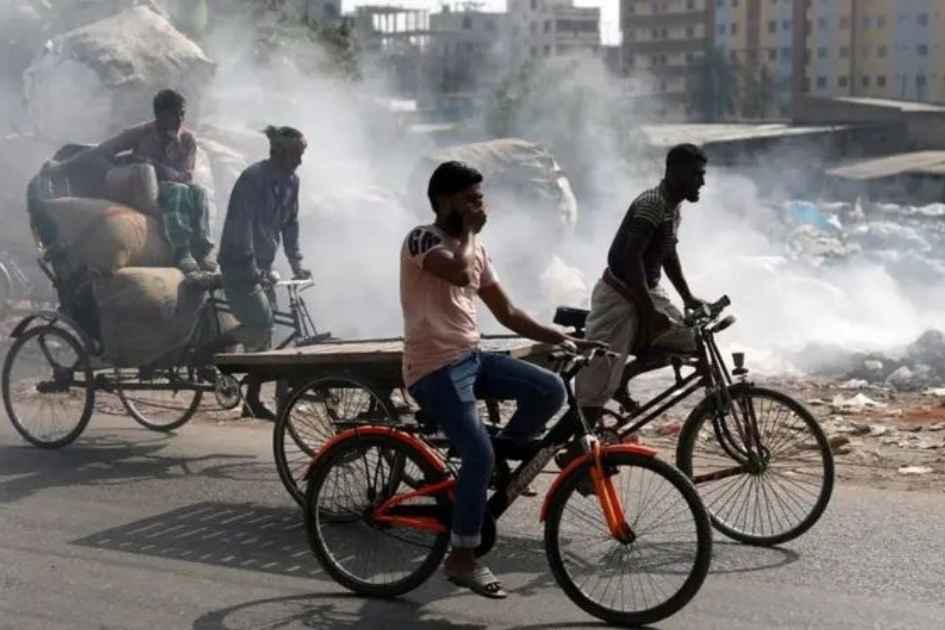



As Bangladesh heads to national elections, parties overlook a deadly air pollution crisis causing 100,000 deaths annually, despite severe health, economic, and fuel quality impacts, experts warn.
Over 100,000 people die each year in Bangladesh due to air pollution, yet the issue is largely absent from the manifestos of political parties ahead of the country’s 13th national parliamentary election on February 12. Experts warn that ignoring the crisis risks turning a public health disaster into a political failure.
While parties campaign on slogans like “development,” “growth” and “Smart Bangladesh”, citizens continue to breathe dangerously polluted air. Cities such as Dhaka, Chittagong, Gazipur and Narayanganj consistently rank among the world’s most polluted urban areas. According to the Air Quality Life Index (AQLI), air pollution reduces life expectancy by 5.5 years and the World Bank estimates it costs the economy 4.4 percent of GDP annually.
Tests reveal that fuel oils in Bangladesh contain sulphur far above legal and global limits, worsening air pollution, damaging engines and threatening public health. Laboratory analyses show sulphur levels as high as 2,800 parts per million (ppm) compared with the government-approved limit of 350 ppm and the internationally accepted standard of 10 ppm. Experts warn that failure to improve fuel quality will deepen both health and environmental crises.
Dr Ahmad Kamruzzaman Majumder, Dean at the Faculty of Science Stamford University, Bangladesh and Chairman of CAPS added: “Bangladesh cannot claim development while millions breathe toxic air daily. Scientific evidence is clear: polluted air shortens lives, weakens the workforce and undermines economic growth. Political leaders must act decisively or the next generation will pay the price.”
Despite existing laws targeting industrial emissions, brick kilns old vehicles and construction dust, enforcement remains weak. Vulnerable populations, including rickshaw pullers, daily wage laborers garment workers and schoolchildren, bear the brunt of the crisis while wealthier citizens have access to air purifiers and healthcare.
Civil society advocates are urging parties to include concrete commitments in their platforms, such as enforcing the Clean Air Act, modernising brick kilns, phasing out old vehicles, controlling industrial emissions, improving fuel quality, investing in public transport and expanding urban greening.
With global attention on Bangladesh’s development and climate policies, experts stress that voters must hold candidates accountable not only for roads and mega projects but also for the air their children breathe. “Air pollution is not just an environmental issue, it is a public health, social justice and economic crisis”, said Sohanur Rahman, Executive Coordinator of YouthNet Global. “Ignoring it in election manifestos is institutional negligence. Citizens have a right to clean air and political leaders must be held accountable.”
“Voting is not just about granting power, it is about assigning responsibility and accountability”, Rahman added. “Clean air must be a state priority and political pledges must reflect that”, he concluded.




