


The draft decision text landed in negotiators’ inboxes just after dusk on November 21. Within minutes, the murmurs inside Belém’s vast Amazon Convention Center turned into disbelief. The most anticipated element of COP30, a roadmap to phase out fossil fuels, was missing.
Not softened. Not weakened. Gone. There was no mention of phasing out coal, oil or gas, nor even the Dubai language on “transitioning away from fossil fuels” agreed only two years earlier. For many delegates, the deletion felt like the unraveling of a fragile global consensus built since COP28.
“It’s the semi-dead of the fossil-fuel phase-out plan,” said Harjeet Singh, strategic adviser to the Fossil Fuel Non-Proliferation Treaty. “This is a dangerous rollback.”
Climate-vulnerable countries, civil society groups and scientists reacted within hours, warning that the absence of fossil-fuel language strikes at the core of the Paris Agreement’s 1.5°C temperature limit.
A sudden break from Dubai
At COP28 in Dubai, negotiators pushed through a historic line acknowledging fossil fuels as the main driver of global warming, a diplomatic breakthrough after nearly three decades of avoidance. The compromise was imperfect, but many hoped Belém, host of the “Amazon COP,” would transform symbolic wording into a time-bound phase-out pathway.
Instead, the COP30 draft text erased that foundation entirely. An African Group negotiator, speaking off-record, was blunt: “It’s not weakening. It’s disappearing. And that is far worse.”
For diplomats who had spent months preparing for detailed phase-out negotiations, the omission felt like a political ambush.
Inside the backroom: How the fossil bloc won
OPEC’s hard line: According to multiple negotiators, Saudi Arabia and the UAE led an unusually coordinated push to eliminate fossil-fuel language. The bloc argued that mitigation should focus on emissions, not fuels and insisted carbon capture technologies could reconcile continued fossil extraction with climate goals.
A European negotiator described the atmosphere inside the room: “OPEC came prepared. They came united. And they came with red lines.”
India’s reluctant alliance
India did not publicly oppose fossil-fuel discussions but strongly resisted any timelines, warning that a rushed phase-out could undermine development for millions still lacking reliable electricity. Delhi’s “equity-first” framing that developed countries must move first and fastest resonated with many developing nations and ultimately strengthened the fossil-exporting camp.
This strategic ambiguity offered political cover for those pushing for full deletion.
Russia’s re-entry
After years of limited engagement, Russia was more visible at COP30, insisting the text refer only to a “phase-down.” When that was rejected, Moscow pressed for total removal. Several delegates said Russia signaled it would block consensus if fossil-fuel language remained.
Brazil, presiding over COP30, initially supported strong language. But as negotiations grew tense, Brazilian diplomats sought to prevent a full collapse of talks. The presidency opted to prioritize consensus over ambition.
“We removed contentious language to protect the negotiation process,” a senior Brazilian diplomat told AFP. “We hope ministers will restore balance.”
Critics saw it differently, accusing Brazil of yielding to pressure from fossil-fuel powers.
Vulnerable nations feel ‘Betrayed’
For small island states on the front lines of climate impacts, the deletion cut deep.
“How can you claim 1.5°C is alive with no fossil-fuel phase-out?” asked a negotiator from AOSIS, the Alliance of Small Island States. “This is existential for us.”
Least Developed Countries echoed the alarm. Bangladesh, Nepal, Niger and Sudan already face mounting economic losses from climate-driven disasters. For them, a phase-out is not a symbolic demand but a lifeline.
“We endure cyclones, floods, heatwaves, all intensifying,” Singh said. “Without a fossil-fuel phase-out plan, our suffering will increase.”
What the science says and What the draft ignores–According to the Intergovernmental Panel on Climate Change (IPCC), fossil-fuel production must decline sharply to stay within 1.5°C:
Coal: –95% by 2050
Oil: –60%
Gas: –45%
And no new fossil-fuel infrastructure
Yet the COP30 draft avoids all timelines, targets or even recognition of fossil fuels as the root of the crisis.
“The science is brutally clear,” a Stockholm Environment Institute expert told AFP. “You cannot negotiate with the physics of the atmosphere.”
Why Belém stepped back: The political logic
Economic fears: Major producers warn a rapid phase-out could trigger economic shocks, disrupt energy supply and undermine jobs. India argues millions still lack stable electricity, making a rigid timeline unjust. Developing countries are far from unified.
Ambitious: Kenya, Costa Rica, Colombia, Chile
Cautious: India, Indonesia, Nigeria
This split leaves vulnerable nations with limited leverage.
A global transition away from fossil fuels needs trillions in investment money developing countries say they have no hope of accessing without firm commitments from the Global North.
“How can we accept phase-out language when the financing is not on the table?” asked one South Asian negotiator.
Tension escalates outside the venue
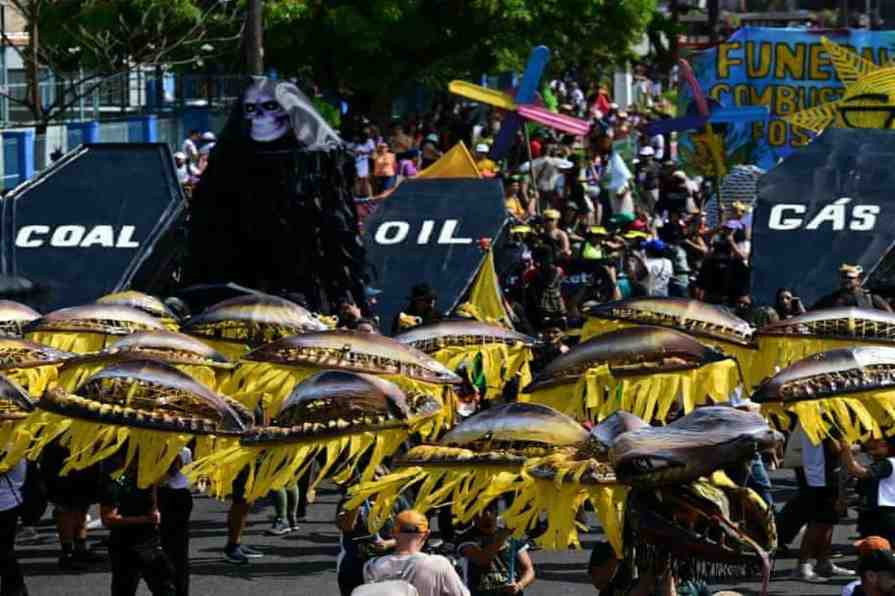
As word spread on Thursday afternoon, hundreds of activists marched through the COP30 Blue Zone chanting “Phase out fossil fuels now!” and “No justice without transition!”
Indigenous groups from across the Amazon joined the protests, framing the deletion as an insult to those defending the rainforest against oil, mining and land grabbing.
“We are not asking for favors,” a Pacific delegate said. “We are asking for survival.
Brazil tries to hold the center
COP30 has increasingly pulled Brazil in two directions: toward ambitious climate leadership in the Amazon, and toward diplomatic neutrality to prevent a breakdown of negotiations.
The presidency insists the current text is merely a “working platform,” and that ministers can still reinsert fossil-fuel language. But several negotiators expressed concern that once removed, such wording rarely returns intact.
A summit at a crossroads
COP30 was billed as the “Amazon COP,” a moment when global climate ambition would align with the urgency of protecting Earth’s largest rainforest. Instead, Belém risks becoming remembered as the summit where the world stepped back from its most vital climate commitment.
The removal of fossil-fuel phase-out language is more than a technical omission. It is a political signal that major emitters are tightening their grip just as science demands the opposite.
For vulnerable nations, it lands as a devastating setback.
For fossil-fuel powers, it marks a strategic victory.
For civil society, it is an urgent call to intensify pressure.
Whether ministers restore the language in the final hours will decide not only the fate of COP30 but the credibility of global climate governance itself.




