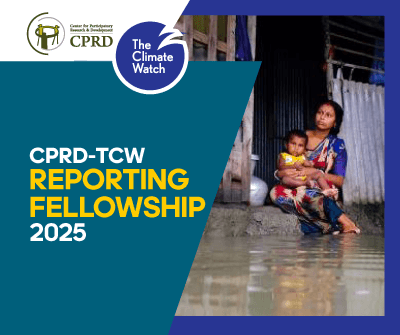
Alarming new research presented at COP30 warns that climate change is silently devastating women’s reproductive health in Bangladesh’s coastal belt. Experts say adaptation plans remain dangerously incomplete unless gender-specific health risks and SRHR are urgently embedded in national and global climate strategies.
Delegates at COP30 were confronted on Monday with stark new evidence that women’s climate-linked health risks remain largely ignored in global adaptation planning, prompting urgent calls to place reproductive health at the core of climate policy.
A high-level session titled “Climate Change and Women’s Reproductive Health” revealed escalating threats to sexual and reproductive health and rights (SRHR) among women in Bangladesh’s coastal regions, where rising salinity is driving a surge in reproductive illnesses. The findings jolted participants and intensified demands for gender-responsive adaptation.
The event was jointly organised by the Centre for Participatory Research and Development (CPRD), Bread for the World, and HEKS/EPER, with moderation by Farah Anzum of the Global South Climate Coalition (GSCC).
Presenting the new research, CPRD’s Sheikh Nur Ataiya Rabbi outlined a study of 400 women of reproductive age, showing that exposure to high salinity made women more than twice as likely to suffer Pelvic Inflammatory Disease (PID) — a condition linked to long-term complications and reduced fertility. The study also reported increases in irregular menstruation, adverse pregnancy outcomes, sexually transmitted infections, miscarriages, and preterm births in heavily affected coastal communities.
“These findings are a stark reminder that climate change is inflicting invisible yet devastating health impacts on women,” Rabbi said. “Coastal women are bearing severe physiological burdens, yet neither the National Adaptation Plan nor climate-finance documents acknowledge SRHR.”
The panel of experts included Additional Finance Secretary AKM Sohel, Global Climate and Health Alliance head Dr Jenny Miller, UN University Fellow Dr Biswajit Chitale, environmental economist Dr Sourya Dasgupta, and Regenerate Africa’s gender-health specialist Nakuwa Nyona Kasekende. Speakers warned that adaptation systems will remain fragile unless they incorporate sex-disaggregated data, climate-resilient health monitoring, and localised interventions tailored to women’s needs.
Health has emerged as a defining theme at COP30. At the WHO Health Pavilion, experts highlighted that extreme heat, intensified by global warming, is now claiming around half a million lives annually, placing unprecedented pressure on already strained health systems and raising fears of systemic collapse.
As negotiations advance on the proposed Belém Health Action Plan, advocates and negotiators are pressing for SRHR and women’s climate-specific health risks to be fully integrated into adaptation frameworks. Without such commitments, they warned, millions of women in climate-vulnerable countries will remain acutely exposed.
Bangladeshi youth delegate Sohanur Rahman, Executive Coordinator of YouthNet Global, said coastal and char women are carrying a burden they did not create. “Coastal women are enduring health harms they did not cause. If adaptation plans and climate finance continue to overlook their reproductive health needs, we are abandoning the very communities most affected by the climate crisis,” he said.